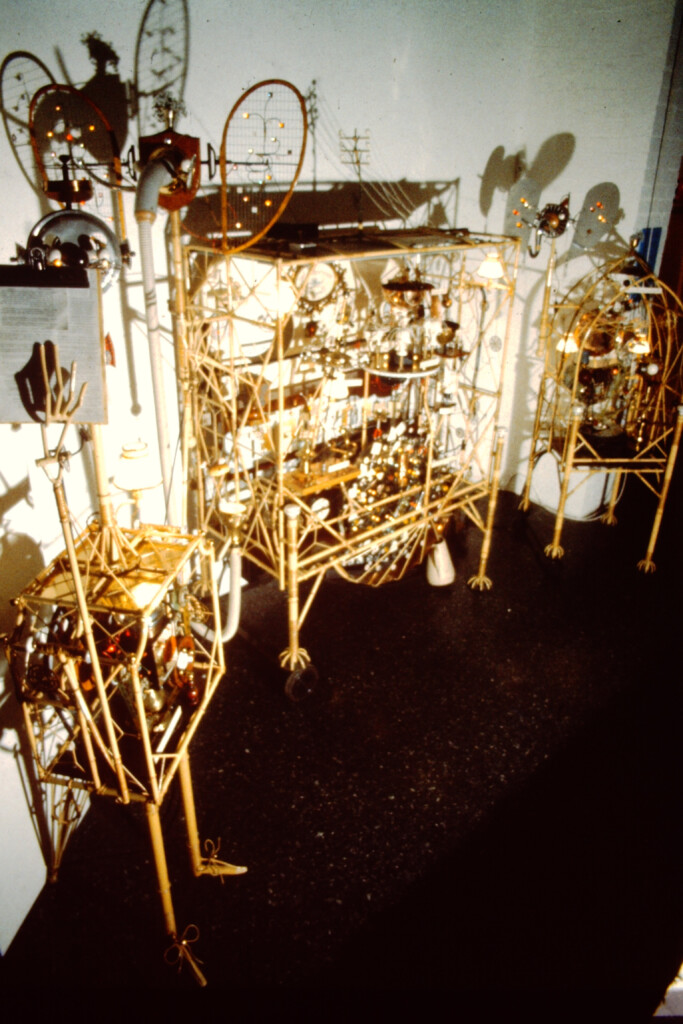
Institute of Contemporary Arts, London · 2 August – 20 October 1968 ·
In the summer of 1968, London’s Institute of Contemporary Arts (ICA) presented one of the most extraordinary and forward-thinking exhibitions of the decade. Cybernetic Serendipity: The Computer and the Arts, curated by Jasia Reichardt, explored the increasingly fascinating relationship between technology, science and artistic creativity.
It was the first major international exhibition in Britain devoted to the relationship between the arts and new technology, bringing together artists, composers, engineers, mathematicians, scientists and poets in an ambitious exploration of how computers and cybernetic systems could influence creative expression.
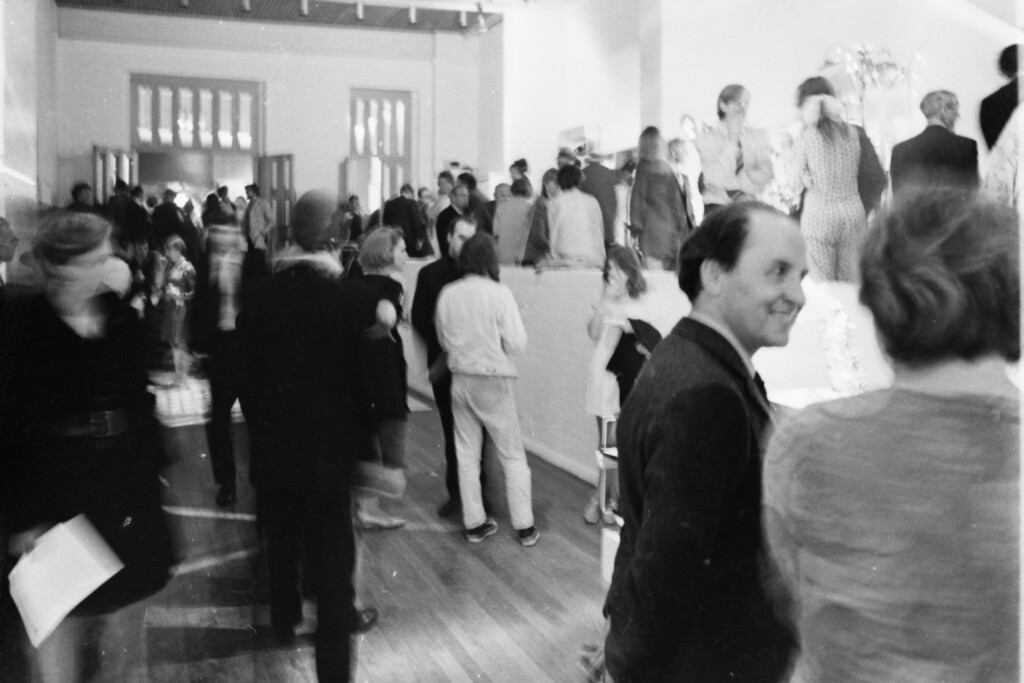
The exhibition ran from 2 August until 20 October 1968 and attracted approximately 60,000 visitors. More than 130 contributors participated, making it an unusually broad collaboration between disciplines that had traditionally occupied very different worlds.
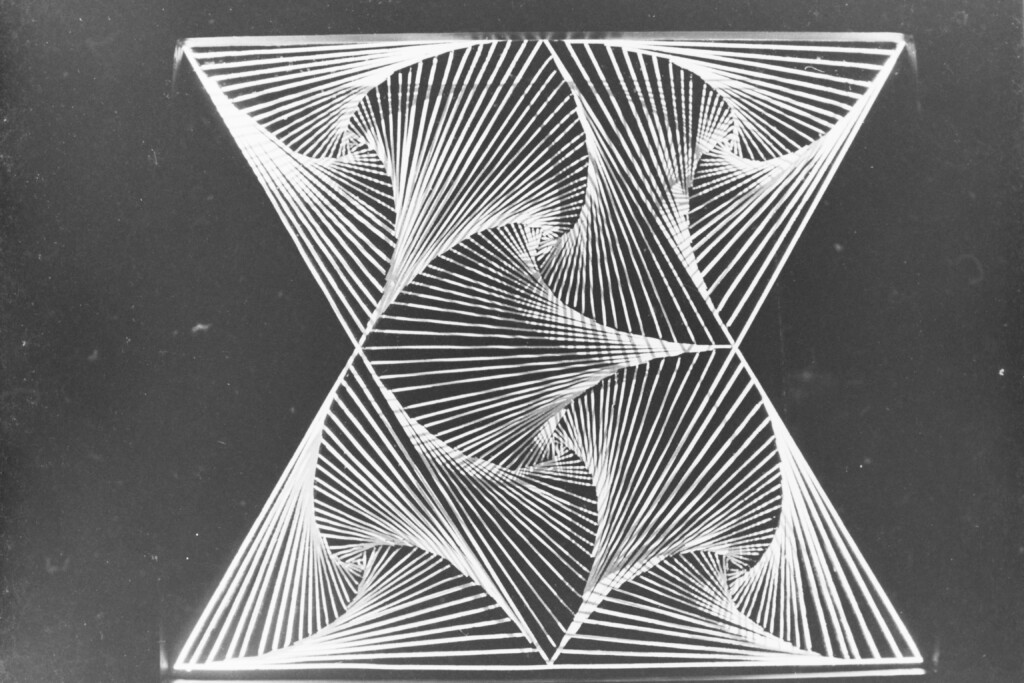
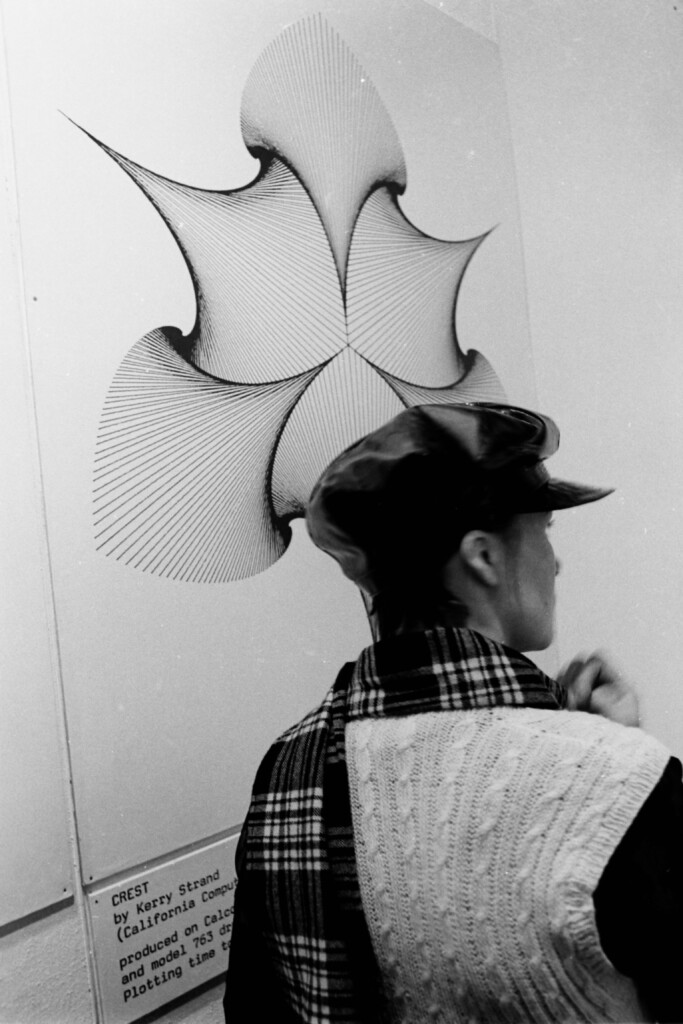
The exhibits challenged conventional ideas about what constituted art and, perhaps more importantly, who or what could create it. Computer-generated paintings, graphics, poetry and music appeared alongside kinetic sculptures, robots, experimental film and interactive installations. Some machines responded to sound or movement, while others generated images, patterns and compositions through mathematical instructions and random processes.
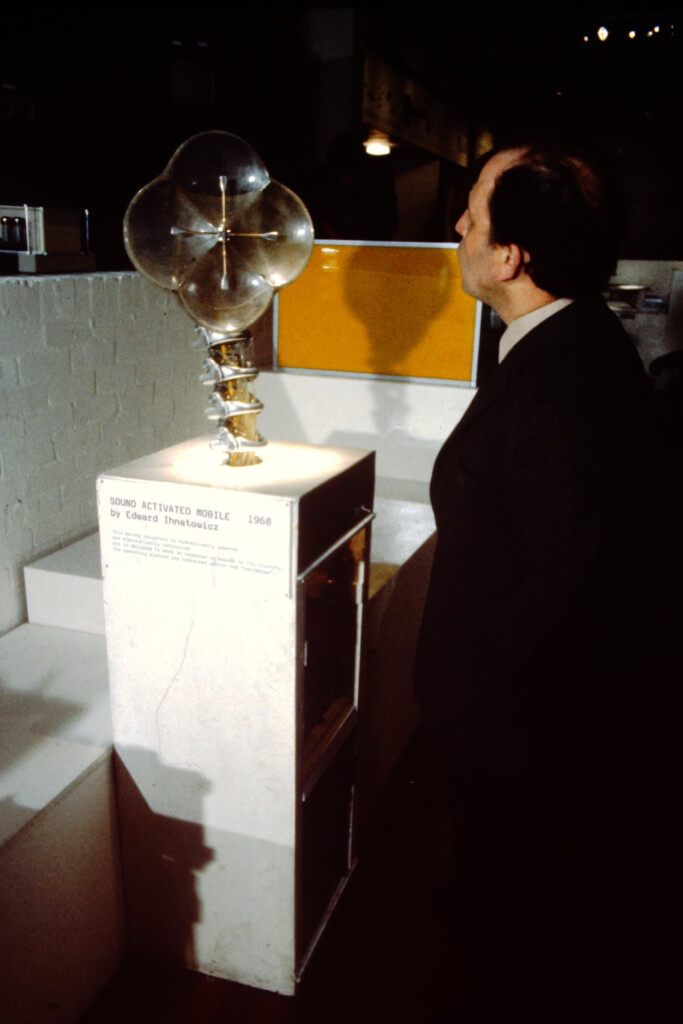
Among the memorable works were Gordon Pask’s interactive Colloquy of Mobiles, Edward Ihnatowicz’s sound-responsive sculpture SAM, and experimental computer-generated compositions and visual works. The exhibition demonstrated that machines could become more than instruments of production: they could participate in the creative process itself.
The exhibition was designed by Polish artist and designer Franciszka Themerson, whose visual approach helped give the show its distinctive identity. Its accompanying catalogue, edited by Reichardt and published as a special issue of Studio International, became an important document of this pioneering moment in the history of art and technology.
Robert Whitaker photographed the exhibition, documenting an unusual meeting of artistic imagination and emerging technology. His photographs preserve a visual record of an event that was not simply displaying new inventions, but questioning the boundaries of creativity itself.
Looking back, Cybernetic Serendipity seems remarkably ahead of its time. In 1968, computers were still largely associated with scientific research, industry and complex calculations. The idea that they might become collaborators in making art, composing music or generating poetry was both exciting and, to many, rather unconventional.
Yet the questions raised by the exhibition remain relevant today, particularly as computers and artificial intelligence increasingly influence the way art is created and experienced.
For Robert, whose photographic interests regularly took him beyond conventional artistic subjects, the exhibition offered an opportunity to document an important moment in London’s cultural and creative history.
More than half a century later, his photographs provide a fascinating glimpse into an exhibition that anticipated many of the conversations about art, technology and artificial creativity that continue today.
Photographs by Robert Whitaker.