
Surrealism, Photography and the Art of Seeing
The relationship between Robert Whitaker (1939–2011) and Man Ray (1890–1976) is an intriguing meeting of two generations of photographers, connected by an interest in surrealism, experimentation and the possibilities of photography beyond simply recording what the eye sees.
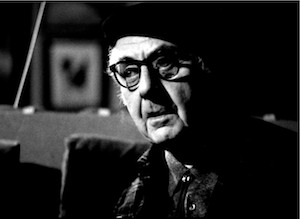
In 1967, Robert photographed Man Ray in Paris. It was a particularly interesting encounter for a young photographer whose own visual language was developing around unusual perspectives, imaginative compositions and an interest in the surreal. Man Ray was one of the most important figures in the history of experimental photography, and his influence on the way subsequent generations understood the medium was considerable.
Although they belonged to different generations and worked in very different circumstances, both men shared an understanding that photography could be something more than documentation. It could be an instrument of imagination, a means of transforming familiar subjects into something unexpected, and a way of revealing another dimension of ordinary life.
Man Ray – The artist who transformed photography
Born Emmanuel Radnitzky in Philadelphia on 27 August 1890, Man Ray became one of the defining figures of twentieth-century modern art. The son of Russian-Jewish immigrants, he grew up in New York, where he developed an early interest in drawing, painting, design and the emerging modernist movement. He adopted the name Man Ray as his artistic identity.
Although he became internationally recognised for his photography, Man Ray always considered himself a painter first. His artistic practice, however, was never confined to one medium. He worked across painting, sculpture, photography, film, assemblage and experimental printing, frequently moving between disciplines and challenging the conventions associated with each.
His early artistic development was closely connected to the New York avant-garde. He encountered the work of Alfred Stieglitz and became friends with Marcel Duchamp, a relationship that would prove particularly important. Together, they helped establish a Dada presence in New York, questioning traditional artistic values and embracing humour, chance, absurdity and unconventional methods of making art.
In 1921, Man Ray moved to Paris, where he became part of an extraordinary artistic community that included Duchamp, André Breton, Tristan Tzara, Louis Aragon and Paul Éluard. Paris would remain central to his life and work for much of his career.
The city was then a meeting place for artists, writers, photographers and intellectuals who were challenging established ideas about art, literature and society. Man Ray became an important participant in both the Dada and Surrealist movements, although he never allowed himself to be entirely defined by either.
His photographic studio in Paris became a meeting point for the cultural avant-garde. He photographed artists, writers, performers and personalities, creating an extraordinary visual record of the people who shaped modern art during the interwar years.
Among his celebrated subjects were Pablo Picasso, James Joyce, Jean Cocteau, Gertrude Stein, Salvador Dalí and many other figures from the artistic and literary worlds.
His portraits were rarely conventional exercises in likeness. Through lighting, composition, shadows, unusual framing and experimental darkroom techniques, he sought to communicate something of the personality and creative identity of his subjects.
The Surrealist vision
Surrealism played an important part in Man Ray’s artistic development and became one of the defining characteristics of his photography.
Emerging in Paris during the early 1920s, Surrealism sought to move beyond conventional representations of reality. Influenced by dreams, the unconscious, unexpected associations and the irrational, its artists attempted to uncover the strange and mysterious qualities hidden beneath everyday appearances.
For photographers, this offered extraordinary possibilities.
Rather than simply recording a person, place or object as it appeared, the camera could be used to distort, fragment, reinterpret or transform it. Shadows could become subjects in their own right. Familiar objects could acquire unfamiliar meanings. The human body could become an abstract composition.
Man Ray embraced these possibilities wholeheartedly.
His photographs frequently combined technical experimentation with a playful, sometimes unsettling imagination. He was interested in the relationship between reality and illusion, and in the ability of photography to make something entirely ordinary appear mysterious.
His celebrated image Le Violon d’Ingres (1924), depicting the back of a female nude transformed into the shape of a violin, is an excellent example of this approach. By combining photographic manipulation, visual association and a reference to the painter Jean-Auguste-Dominique Ingres, Man Ray created an image that became one of the defining photographs of Surrealism.
He also experimented with solarisation, multiple exposure, unusual lighting and alternative printing methods, developing a distinctive visual vocabulary that influenced generations of photographers.
Rayographs – Photography without a camera
Perhaps Man Ray’s most important contribution to experimental photography was his development and popularisation of the technique he called the Rayograph.
In 1922, shortly after arriving in Paris, he began experimenting with camera-less photography. Instead of using a camera and lens, he placed objects directly onto light-sensitive photographic paper and exposed them to light.
The resulting images were a combination of silhouettes, shadows, translucent forms and unexpected patterns. Everyday objects were transformed into abstract compositions, often appearing almost ghostly or dreamlike.
The technique itself had earlier photographic precedents, but Man Ray gave it a distinctive artistic identity and explored its possibilities with remarkable imagination.
He published a portfolio of these images in December 1922 under the title Les Champs délicieux: Rayographies, accompanied by an introduction from the Dada poet Tristan Tzara.
The Rayographs became an important part of the visual language of modern art. They demonstrated that photography did not necessarily require a camera, a recognisable subject or even a conventional understanding of perspective.
Man Ray described his ambition as working directly with light itself. It was a radical idea at a time when photography was still largely regarded as a technical process for reproducing reality.
His experiments extended beyond still photography. In 1923, he produced Le Retour à la raison (Return to Reason), a short experimental film that translated the Rayograph approach into moving images.
For Man Ray, the darkroom was not simply a place where photographs were processed. It was an extension of the artist’s imagination.
Solarisation and the manipulation of reality
Another important aspect of Man Ray’s photographic experimentation was solarisation, a technique associated with his collaboration with photographer Lee Miller.
The process involved exposing a partially developed photographic image to light, producing a partial reversal of tones. Dark and light areas could acquire unexpected outlines, creating an almost metallic appearance around the subject.
Although solarisation had been discovered before Man Ray’s experiments, he developed it into a highly recognisable artistic technique.
His portraits and fashion photographs frequently used this effect to create images that appeared suspended between positive and negative, reality and abstraction.
These experiments reinforced his belief that photography should not be restricted by the technical conventions of the medium. Mistakes, accidents and unexpected results could become creative opportunities.
This philosophy was central to the Dada and Surrealist movements and would remain an important characteristic of his work throughout his life.
Robert Whitaker – Paris, 1967
It was against this extraordinary artistic background that Robert Whitaker photographed Man Ray in Paris in 1967.
By this time, Man Ray was 76 years old and had long established himself as one of the great experimental artists of the twentieth century. Having returned to Paris in 1951 after spending the war years in California, he had resumed his life in the French capital, continuing to paint, photograph and experiment.
For Robert, photographing Man Ray represented an opportunity to document an artist whose ideas had helped redefine the possibilities of photography.
Robert’s interest in surrealism was not simply an appreciation of an artistic movement. It was something that informed his own approach to photography. He was interested in unusual visual relationships, unexpected juxtapositions and the ability of an image to communicate something beyond its immediate subject.
The photograph of Man Ray therefore has an interesting significance within Robert’s archive. It brings together a photographer whose work was developing during the 1960s with an artist whose experiments had helped establish photography as an independent and expressive art form.
There is also an interesting historical dimension to the timing. By 1967, the artistic revolution that had taken place in Paris during the 1920s had become an important influence on a new generation of photographers, designers, musicians and visual artists.
The cultural atmosphere of the 1960s, with its interest in experimentation, alternative lifestyles, psychedelic imagery and challenges to established conventions, provided fertile ground for the rediscovery of Dada and Surrealism.
Man Ray’s influence was particularly relevant to this changing visual culture.
Robert’s photograph preserves a meeting with one of the artists who had helped shape the visual language of modern photography.
From Rayographs to Whitographs
There is a particularly interesting connection between Man Ray’s experimental approach and Robert’s later development of his own photographic technique, which he called Whitographs.
Later in his life, Robert began experimenting with the photographic representation of people and objects using a special technique that he had developed himself. Rather than relying exclusively on conventional photographic methods, he explored ways of transforming the appearance of his subjects to produce distinctive and often unexpected images.
He called these works Whitographs, giving the process a name that echoed Man Ray’s earlier invention of the Rayograph.
The comparison is fascinating, although the two techniques should be understood as distinct processes rather than assumed to be technically identical.
Man Ray’s Rayographs were created without a camera, using objects placed directly onto photographic paper. Robert’s Whitographs were the product of his own later experimentation and should be understood on their own terms.
Nevertheless, there is a clear artistic parallel between the two approaches: both photographers were interested in pushing photography beyond straightforward representation, and both gave their experimental work a distinctive identity through a named photographic process.
It is tempting to see this as a conversation across generations of photographers. Man Ray had demonstrated that photography could be reinvented through experimentation, while Robert continued to explore that same creative freedom in his own way.
For both men, the photographic image was not necessarily the end of a process of observation. It could be the beginning of a process of interpretation.
A shared interest in the extraordinary within the ordinary
One of the most interesting aspects of comparing Robert Whitaker and Man Ray is their shared willingness to question what a photograph could be.
Man Ray approached photography as an artist who happened to use a camera. His work was informed by painting, sculpture, literature, film and the intellectual ideas of the avant-garde.
Robert, similarly, never appeared content to regard photography simply as a means of recording events or personalities. His photographs often possess a strong visual identity, combining documentary observation with an interest in composition, atmosphere and the unexpected.
This was particularly evident in the creative environment of the 1960s, when Robert was photographing musicians, artists, writers and personalities associated with the emerging counterculture.
His interest in surrealism sat comfortably alongside his fascination with the people and movements challenging conventional ideas of art and society.
Man Ray’s career demonstrated that the photographer could also be an inventor, an experimenter and an artist in the fullest sense. Robert’s later Whitographs suggest that this spirit of experimentation remained relevant to his own creative development.
There is no need to suggest that the two men shared a direct working relationship or that Robert’s technique derived from Man Ray’s. The more compelling connection is their common artistic curiosity.
Two photographers, two generations
Man Ray died in Paris on 18 November 1976, aged 86. His legacy extends far beyond his individual photographs. He helped establish photography as a medium capable of standing alongside painting and sculpture, and demonstrated that experimentation could be as important as technical perfection.
His work is represented in major museum collections around the world, including the Museum of Modern Art in New York, the Centre Pompidou in Paris and the Solomon R. Guggenheim Museum.
For Robert Whitaker’s archive, the 1967 portrait of Man Ray is particularly valuable because it documents a meeting with a major figure in the history of modern art, while also providing an interesting connection to Robert’s own artistic interests.
The parallel between Rayographs and Whitographs adds another dimension to that encounter. Both names represent an individual photographer’s desire to take an established medium and make something personal and distinctive from it.
Ultimately, this is a story about the continuing evolution of photography: from Man Ray’s revolutionary experiments in Paris during the 1920s to Robert Whitaker’s own explorations several decades later.
Different generations, different techniques, but a shared belief that a photograph need not simply show the world as it is. It can reveal the world as an artist imagines it.
Historical and research references
The following institutional sources provide useful background for the archive’s historical account:
Getty Research Institute – Man Ray Archives. Archival material documenting his life, correspondence and artistic relationships.
The Museum of Modern Art (MoMA) – Man Ray: biography and artistic practice. Particularly useful for Rayographs, Dada and Surrealism.
Centre Pompidou – Man Ray: artist biography. Excellent background on his Paris years and photographic career.
San Francisco Museum of Modern Art – Man Ray: photographic experiments. Includes an explanation of his darkroom techniques.
The Metropolitan Museum of Art – Man Ray: When Objects Dream. Further exploration of his Rayographs and experimental practice.