
A lifelong friendship – From Melbourne’s bohemian art scene to the psychedelic underground of London
Some friendships shape the course of a person’s life. For photographer Robert Whitaker, his friendship with Australian artist Martin Sharp was one of those relationships.
Their story began in Melbourne in the early 1960s, within a lively circle of Australian artists, writers, filmmakers and unconventional thinkers. It continued in London during the explosion of underground culture in the late 1960s, where the two became close neighbours, creative collaborators and central figures in the emerging psychedelic movement.
Although their personalities were very different, they shared an extraordinary amount: a fascination with art, surrealism, photography, music, experimentation and the possibilities of visual expression. They were both adventurous, curious and constantly searching for new ideas, new people and new ways of looking at the world.
For Robert, Martin was much more than a subject for his camera. He was a close friend, an artistic influence and a fellow traveller through some of the most exciting years of their lives.
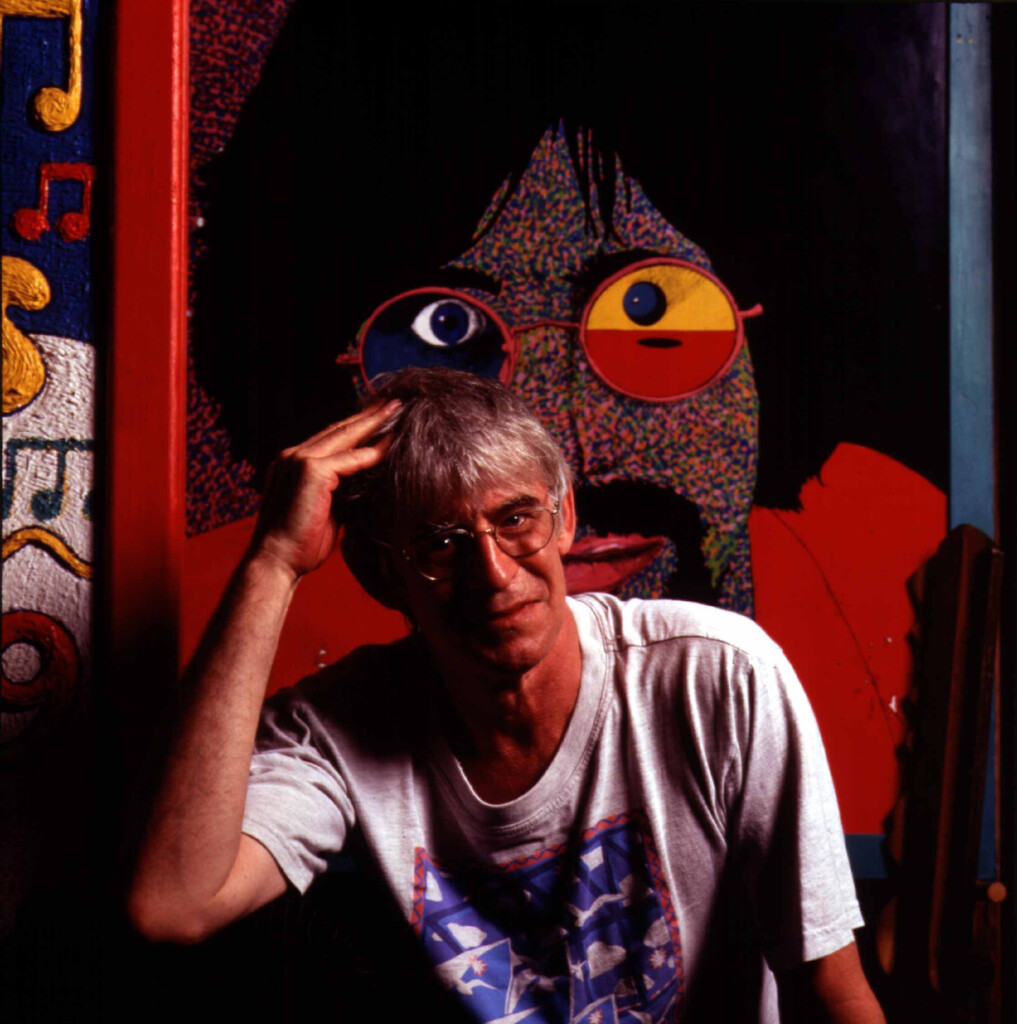
Melbourne – Where the friendship began
Robert arrived in Melbourne in 1961. Originally from England, he had moved to Australia to study and to explore new opportunities. He soon found himself immersed in a small but remarkably active artistic community.
Melbourne at the time was home to a generation of artists and cultural figures who were challenging traditional ideas about art, photography, literature and society.
Among the people Robert met were artists Mirka and Georges Mora, Charles Blackman, John and Sunday Reed, Barry Humphries, filmmaker Albie Thoms, writer Germaine Greer and publisher Richard Neville.
It was through this environment, and particularly through the Mora family, that Robert became friends with Martin Sharp.
Martin (1942–2013), born in Sydney, was already establishing himself as an artist, cartoonist and illustrator. He was studying art and developing a distinctive visual language that combined humour, surrealism, popular culture and an interest in the unconventional.
He had become involved with the Australian edition of Oz, the irreverent underground magazine he helped establish with Richard Neville and Richard Walsh.
Robert and Martin quickly discovered a shared enthusiasm for artistic experimentation. Their friendship developed around conversations, ideas, parties and the people they encountered through Melbourne’s artistic community.
The Mora family’s beach house at Aspendale was one of the social centres of this circle. It was an informal gathering place where artists, writers and friends came together, and where Robert and Martin spent time with people who would continue to feature in their lives for decades.
Looking back, these Australian years were particularly important in Robert’s development as a photographer. He was moving away from the limitations of conventional commercial photography and becoming increasingly interested in photographing people, personalities and the creative world around him.
The Australian artists and writers he encountered had a profound influence on his outlook.
The influence of Richard Neville and Martin Sharp
Two particularly important figures in this period were Richard Neville and Martin Sharp.
Neville was a publisher, writer and provocateur with an extraordinary ability to bring together people who challenged conventional thinking. Sharp brought the visual imagination, artistic experimentation and irreverent humour that would become synonymous with Oz.
Together, they helped establish a magazine that would become one of the most recognisable publications of the international counterculture.
For Robert, these friendships opened up an entirely new creative environment. He was no longer simply photographing musicians, personalities or commercial assignments. He was becoming part of a wider artistic community in which photography, illustration, graphic design, performance and publishing frequently overlapped.
This distinction is important when looking at Robert’s later work. His photography was often collaborative. He enjoyed working with artists who could take an image and transform it into something unexpected.
Martin Sharp was perhaps the perfect creative partner.
London – The Pheasantry and the psychedelic years
By 1966, Martin Sharp had travelled to London, following the path of Richard Neville and the expanding international underground movement.
Robert was already back in England, having established himself through his work with The Beatles and other musicians. When Martin and Richard became involved in establishing the London edition of Oz in 1967, the friendship between Robert and Martin developed into a particularly productive creative partnership.
Robert was living at The Pheasantry on King’s Road in Chelsea, an artists’ colony that became a meeting place for musicians, photographers, artists, writers and other figures associated with the emerging London underground.
Martin also lived and worked there, and the two were next-door neighbours.
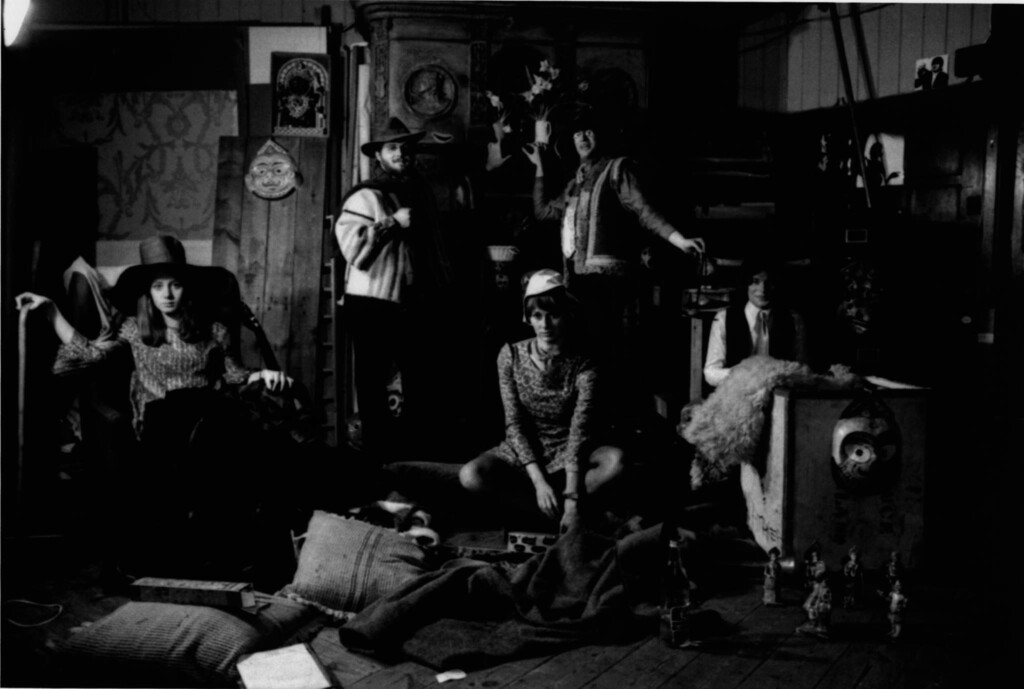
The Pheasantry was an extraordinary environment. People came and went, ideas were exchanged and new projects were constantly developing. Among those associated with the building and its wider circle were Germaine Greer, Eric Clapton, Philippe Mora and many other personalities from the artistic and musical worlds.
Martin’s studio became a particularly important meeting place. His work was becoming increasingly experimental, with vivid colours, intricate collages, psychedelic imagery and an interest in combining different forms of visual art.
Robert contributed photographs to Oz, and his camera became an important part of the creative process.
Their work together was based on a natural exchange of ideas. Robert supplied the photographic material, while Martin frequently reinterpreted, rearranged and transformed it through his artwork.
Neither was particularly interested in following established rules.
Plant a Flower Child – A defining collaboration
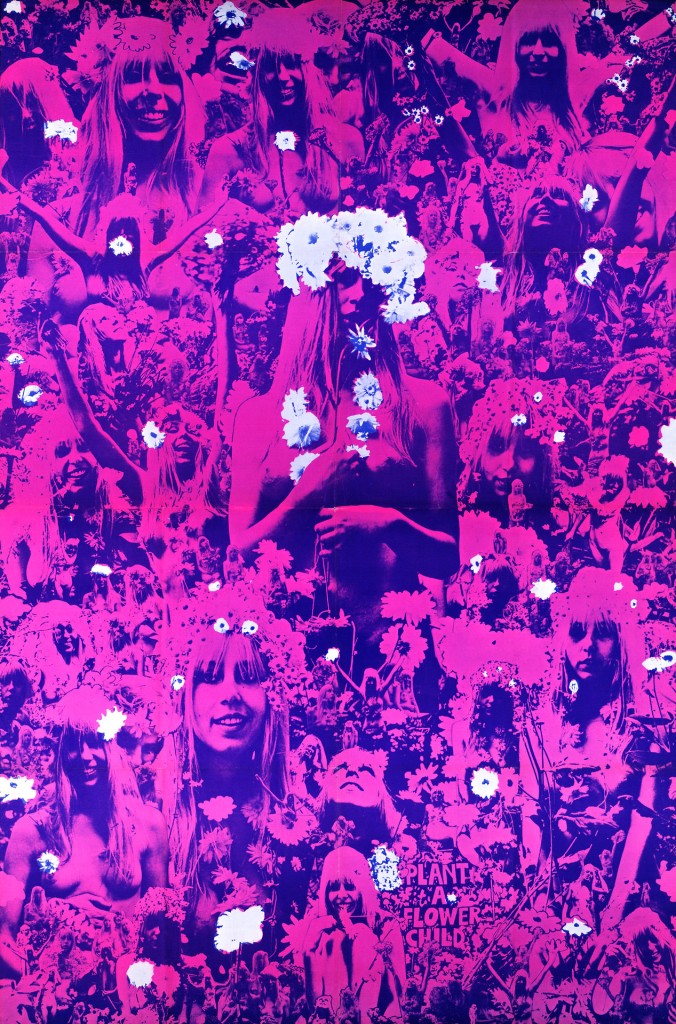
One of the most successful collaborations between Robert and Martin was Plant a Flower Child, produced in 1967 for the London edition of Oz.
The project began with a photographic session in the English countryside. Robert photographed identical teenage twins Michelle and Nicole Aloszko, who posed among flowers in a playful series of images.
Martin took Robert’s photographs and transformed them into a colourful psychedelic composition, using repetition, collage and vivid Day-Glo colours.
The resulting poster became one of the defining images of the Summer of Love.
Published as an insert in Oz issue number five, it was an enormous success and helped improve the magazine’s financial position. The image sold in its tens of thousands and became closely associated with the optimism and visual culture of 1967.
It was a perfect example of how the two friends worked together.
Robert’s photographs provided the foundation, but Martin’s imagination turned them into something entirely different. The result was neither simply a photograph nor simply an illustration, but a combination of the two.
Their collaboration demonstrated how photography could become part of a much larger artistic statement.
Cream and Disraeli Gears
Another important collaboration came through Martin’s association with the British rock group Cream.
In 1967, Robert travelled with the band during a tour of the north of England and Scotland, producing a series of photographs that Martin could use in connection with the group’s forthcoming album, Disraeli Gears.
Robert returned with colour prints, which Martin began cutting up and rearranging into a psychedelic composition.
The finished artwork became one of the most celebrated album sleeves of the decade.
Martin’s design for Disraeli Gears combined photographic imagery, collage, illustration and fluorescent colour, creating an extraordinary visual counterpart to Cream’s music.
Robert’s photographs from the Scottish journey were used on the reverse of the album sleeve, while the front cover was developed from a separate publicity photograph and other collage material.
Once again, the project illustrated the creative relationship between the two men: Robert’s photography and Martin’s ability to transform images into something entirely new.
Oz magazine – A meeting of art, photography and rebellion
The London edition of Oz became one of the most important underground publications of the 1960s.
Edited by Richard Neville, Jim Anderson and Felix Dennis, the magazine challenged established attitudes towards politics, sexuality, censorship, music and contemporary culture.
Martin Sharp was its principal artistic force during its early London years, creating covers, illustrations, posters and experimental layouts that gave the publication its distinctive identity.
Robert contributed photographs to the magazine, including images that Martin could incorporate into his artwork.
Their involvement extended beyond individual assignments. They were part of a group of friends and collaborators who were attempting to create something different from the established publishing and artistic world.
The magazine brought together writers such as Germaine Greer, artists, musicians, photographers and filmmakers. It was a place where ideas could be explored without the restrictions of conventional commercial publishing.
The friendship between Robert and Martin was central to this environment.
The Magic Theatre and experimental film
Their creative relationship also extended into experimental filmmaking.
One particularly interesting project was Darling, Do You Love Me?, made in 1968 with Germaine Greer. Robert and Martin collaborated on the short film, which featured Greer in an eccentric Gothic performance.
The film reflected their shared interest in surrealism, humour and unconventional visual storytelling.
Martin was also involved with the extraordinary Magic Theatre issue of Oz, published in November 1968. This was an ambitious multimedia experiment involving collage, photography, film, theatre and visual performance.
The issue demonstrated Martin’s desire to push the boundaries of what a magazine could be.
For Robert, these projects represented another opportunity to explore photography beyond the traditional still image.
Martin returns to Australia – The Yellow House
In 1969, Martin returned to Australia.
He would soon become involved in one of the most interesting artistic experiments in the country’s cultural history: the Yellow House in Potts Point, Sydney.
Established in 1970, the Yellow House was an artists’ collective and experimental creative space inspired partly by the work of Vincent van Gogh and the concept of a shared artistic environment.
It brought together painters, sculptors, filmmakers, performers and other creative personalities.
Martin helped turn the building into a living artwork, where different disciplines could exist alongside one another. Visitors encountered an environment that was part gallery, part theatre, part performance space and part artistic experiment.
His work continued to evolve, moving through painting, collage, posters, sculpture, theatre design and an extraordinary fascination with popular culture.
He would later become particularly associated with his iconic imagery for Luna Park in Sydney, including the enormous smiling face at the entrance.
Although their lives and working environments changed, Robert and Martin remained close friends.
A friendship beyond the 1960s
What makes Robert’s photographic record of Martin particularly valuable is that it does not end with the psychedelic years.
Robert continued to photograph Martin throughout their friendship, documenting him not only as the celebrated artist of the 1960s but also as a person in his everyday surroundings.
The photographs provide glimpses into Martin’s private world: at home, with friends, with his girlfriend Eija and surrounded by the artwork and objects that reflected his extraordinary personality.
They show a different side of an artist whose public work was often bold, colourful and larger than life.
There is something particularly revealing about the more informal photographs. Martin could be playful, mischievous, eccentric and quietly absorbed in his own world.
He never seemed particularly interested in separating art from everyday life. His surroundings, friendships and personal interests were all part of the same creative universe.
Robert’s camera was able to document this with an intimacy that would have been difficult for an occasional photographer to achieve.
Martin Sharp and the Hippie Hippie Shakers
The photographs associated with Martin and the Hippie Hippie Shakers also form an interesting part of this wider story.
The project revisited the people and atmosphere surrounding the London underground scene and the extraordinary period of Oz magazine.
Robert’s photographs from this circle preserve the connections between people who had shared a particularly formative period in their lives.
They are more than historical records of a fashionable period. They document a network of friendships that continued long after the original excitement of the 1960s had passed.
For Robert, these people remained friends rather than simply subjects.
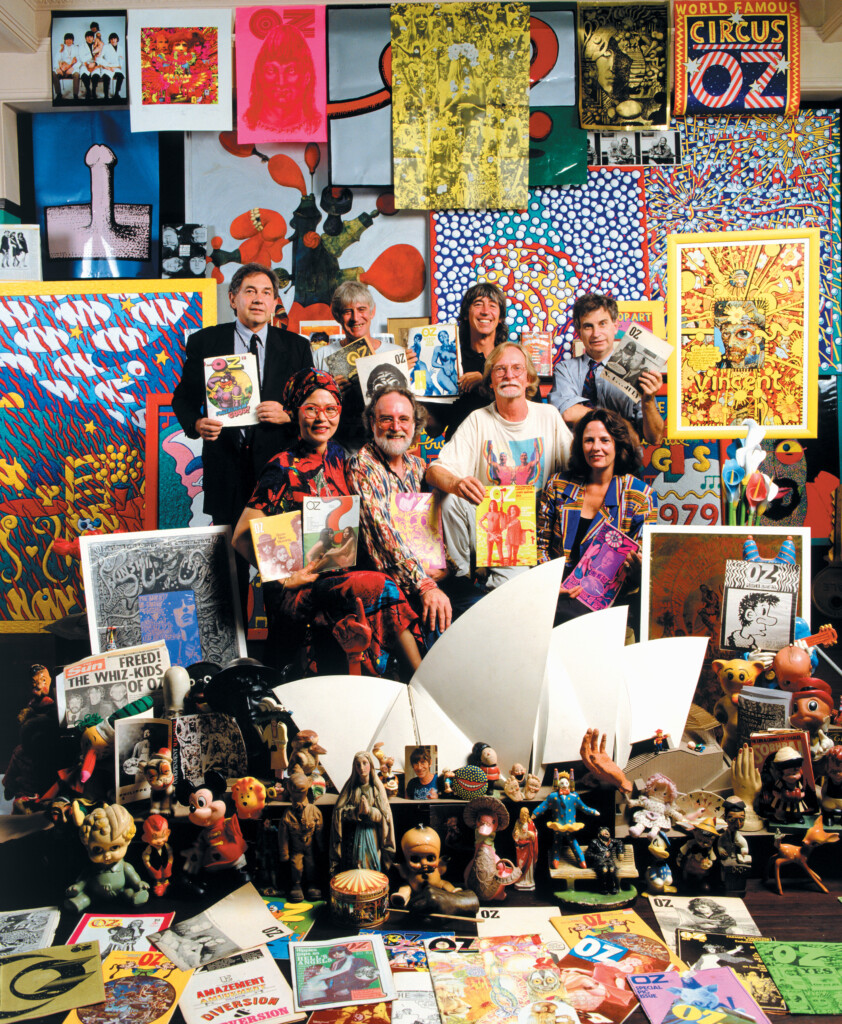
Martin Sharp – An artist without boundaries
Martin Sharp died in Sydney on 1 December 2013, aged 71.
He left behind a remarkable body of work and an artistic legacy that extended across several decades.
His images of Bob Dylan, Jimi Hendrix, Cream and other musical personalities became defining visual statements of the 1960s. His involvement with Oz, the Yellow House and the redevelopment of Luna Park demonstrated an ability to move effortlessly between different creative disciplines.
He remains one of Australia’s most distinctive and influential pop artists.
For Robert Whitaker, however, Martin’s importance was always much more personal.
He was the friend he had first met in Australia’s artistic community, the neighbour with whom he shared The Pheasantry in London, the collaborator who transformed his photographs into iconic images, and someone whose imagination continually encouraged him to experiment.
Their relationship was built on mutual respect, curiosity and a shared belief that creativity should not be restricted by convention.
The photographs – A friendship documented
The photographs in the Robert Whitaker archive offer an unusually personal record of Martin Sharp.
They cover different periods of his life and provide a visual history of their friendship.
From the colourful and experimental world of the 1960s to quieter moments in later years, the photographs capture Martin as both an important cultural figure and a close personal friend.
For Robert, Australian artists had a profound influence on the way he saw the world and developed his photography. Of all the people he encountered during those years, Martin Sharp was undoubtedly one of the most significant.
Their collaboration produced some memorable images of the psychedelic era, but their friendship was something far more enduring.
Robert Whitaker photographed the world around him. Martin Sharp helped him see it differently. Together, they created a body of work that remains an important part of the visual history of the 1960s.