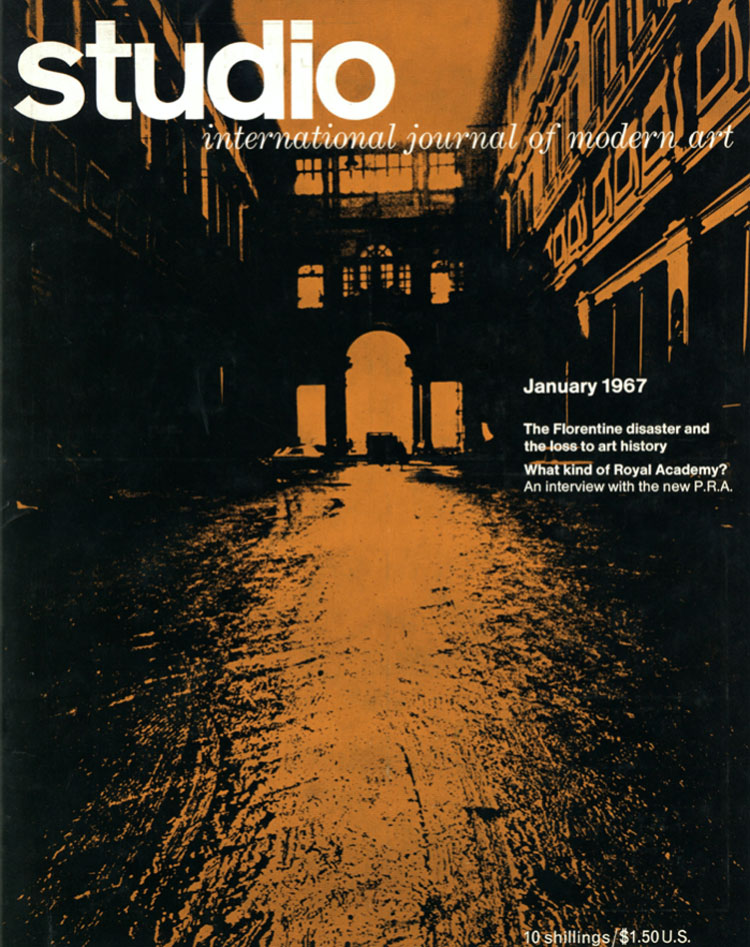
A photographic record of the catastrophe that threatened Florence’s artistic heritage
On 4 November 1966, the River Arno burst its banks and flooded the historic city of Florence. In a matter of hours, one of Europe’s greatest centres of art, architecture and culture was transformed into a scene of devastation. Streets disappeared beneath muddy water, historic buildings were inundated, and priceless paintings, sculptures, manuscripts and books were left covered in thick, contaminated mud.
The disaster would become one of the most significant cultural emergencies of the twentieth century. It brought international attention to the vulnerability of historic collections and prompted an extraordinary rescue effort involving conservators, historians, volunteers and art specialists from around the world.
Among those who travelled to Florence to document the aftermath was British photographer Robert Whitaker.
His photographs were subsequently published in the January 1967 issue of Studio International, Volume 173, Number 885, illustrating an important article by Australian art critic Robert Hughes entitled “The Florentine disaster and the loss to art history”.
One of Whitaker’s photographs was selected for the magazine’s cover, showing the area outside the Uffizi Gallery shortly after the floodwaters had receded. It is a powerful record of the damage and the extraordinary atmosphere left behind by the disaster.
Florence under water
The flood began during the night of 3–4 November 1966, following exceptionally heavy rainfall across Tuscany and the surrounding region. The Arno rose rapidly, overwhelming its banks and sending vast quantities of water through the city.
Florence was particularly vulnerable. Its historic centre, built around the river, contained an extraordinary concentration of artistic and architectural treasures. Churches, museums, libraries, workshops and private collections were all exposed to the rising water.
The flood reached parts of the city with devastating speed. In some areas, water rose several metres, carrying heating oil, mud and debris into buildings. Vehicles were swept through streets, ground-floor shops were destroyed and thousands of homes and businesses were damaged.
The Uffizi, the Biblioteca Nazionale Centrale, Santa Croce and numerous other historic buildings were affected. The damage was not simply to buildings and their contents: it threatened centuries of accumulated cultural history.
A disaster for art and history
The scale of the damage was particularly alarming because Florence contained works that were central to the history of Western art.
Paintings, sculptures, manuscripts and archival documents had been submerged or contaminated. The floodwater left behind a thick layer of mud that penetrated paintings, books and other objects, creating an urgent challenge for conservators.
At the Basilica of Santa Croce, Cimabue’s celebrated Crucifix suffered severe damage. The loss of substantial areas of its painted surface became one of the most recognisable symbols of the disaster.
The Biblioteca Nazionale Centrale also suffered extensive damage. Thousands of books and manuscripts required emergency attention, and the task of drying, cleaning and restoring them would take years.
The flood exposed the fragility of cultural heritage. Objects that had survived wars, political upheavals and centuries of environmental change were suddenly threatened by a natural disaster.
The rescue of Florence’s cultural treasures
The response was extraordinary.
Restorers, librarians, art historians, students and volunteers arrived from across Italy and abroad. Young volunteers became known as the Angeli del Fango, or “Mud Angels”, helping to remove mud, rescue books and paintings, and clear buildings.
Specialist restoration teams developed new techniques to deal with the scale and nature of the damage. The experience would influence conservation practice internationally, encouraging new approaches to the treatment, preservation and documentation of artworks.
The disaster also prompted a wider reassessment of how museums, libraries and historic buildings should prepare for emergencies.
Florence had become a laboratory for modern conservation, with the world’s attention focused on the work of saving its artistic heritage.
Robert Whitaker in Florence
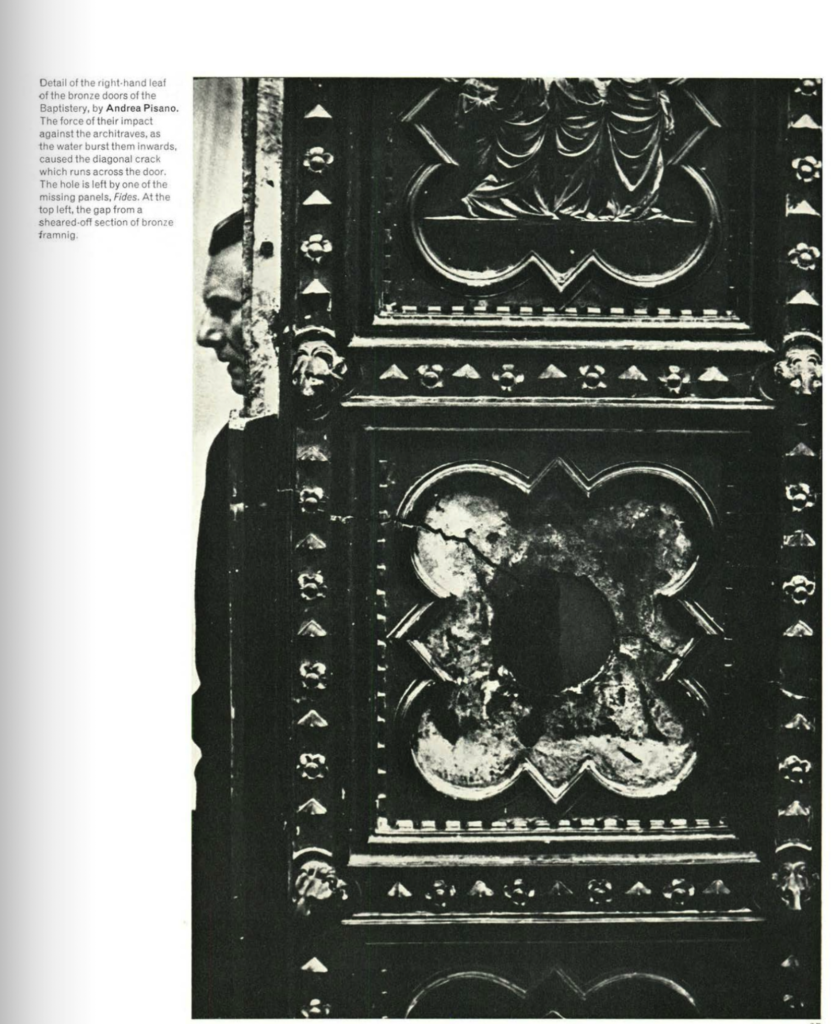
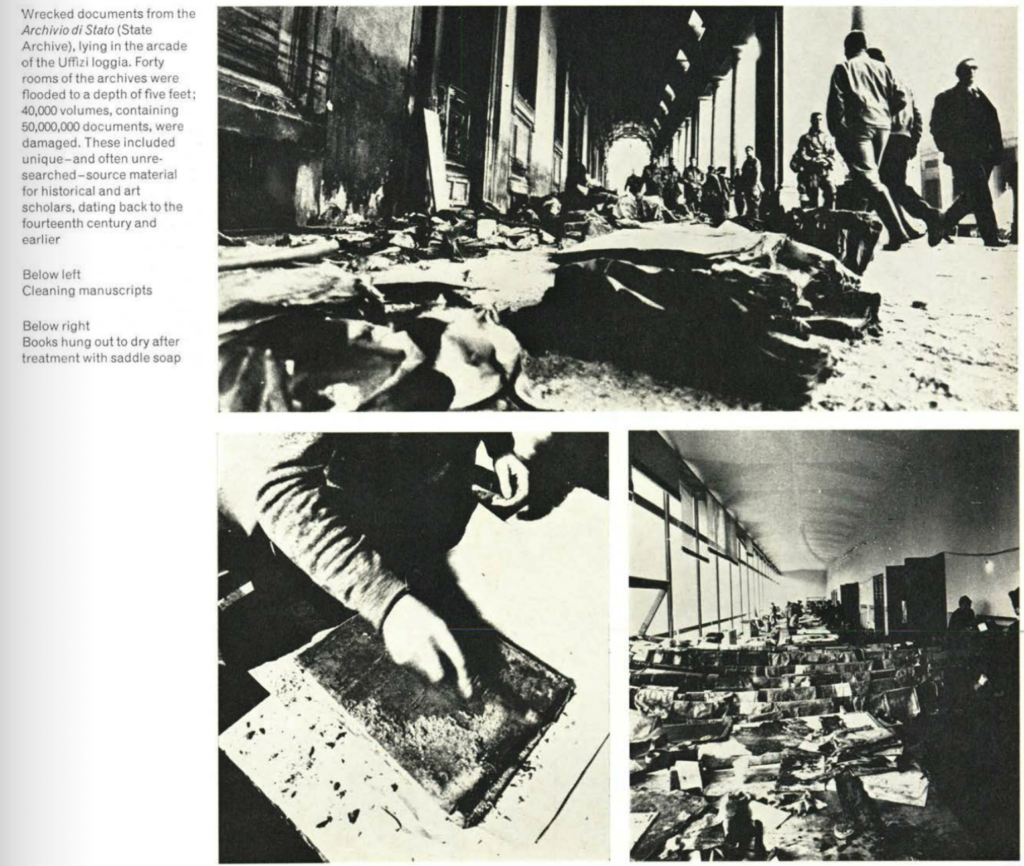
Robert Whitaker’s photographs record the city in the immediate aftermath of the flood.
Rather than documenting the disaster solely as a news event, his work was published in an art-historical context. The photographs illustrated Robert Hughes’s article in Studio International, a magazine concerned with contemporary art, visual culture and the preservation of artistic heritage.
The January 1967 issue, Volume 173, Number 885, carried one of Whitaker’s images on its cover. The magazine identifies the photograph as showing the area outside the Uffizi in Florence, taken shortly after the floodwaters had receded.
The choice of this image was significant. The Uffizi was not simply another historic building affected by the flood; it was one of the world’s most important art museums, housing an extraordinary collection of Renaissance painting and sculpture.
Whitaker’s photographs provided a visual record of the city’s condition at a moment when the immediate emergency was giving way to the enormous task of recovery.
His contribution also illustrates an important aspect of his career. Although he is widely associated with photographs of musicians, artists and cultural figures, he was equally capable of turning his camera towards events with a much wider historical significance.
Robert Hughes and the loss to art history
The article accompanying Whitaker’s photographs was written by Robert Hughes, who was born in Sydney in 1938 and would later become internationally renowned for his writing on art.
Hughes had a particular interest in the relationship between art, history and society. His article, “The Florentine disaster and the loss to art history”, considered the implications of the flood for Florence’s artistic heritage.
The subject was especially appropriate for Studio International. The magazine was addressing not simply the physical damage caused by the flood, but the potential loss to art history when important works and historical records were destroyed or permanently altered.
The photographs and the written article worked together to communicate the scale of the disaster to an international audience.
Published in January 1967
The January 1967 issue of Studio International provides a valuable contemporary record of Whitaker’s work.
The publication details are:
- Magazine: Studio International
- Date: January 1967
- Volume: 173
- Number: 885
- Article: “The Florentine disaster and the loss to art history”
- Author: Robert Hughes
- Article begins: Page 26
- Cover photograph: Outside the Uffizi in Florence, photographed by Robert Whitaker shortly after the floodwaters receded.
The magazine’s original issue record explicitly credits Whitaker for the cover image and states that his photographs illustrate the article.
Photographs © Robert Whitaker