
Robert Whitaker’s photographic portrait of a disappearing community
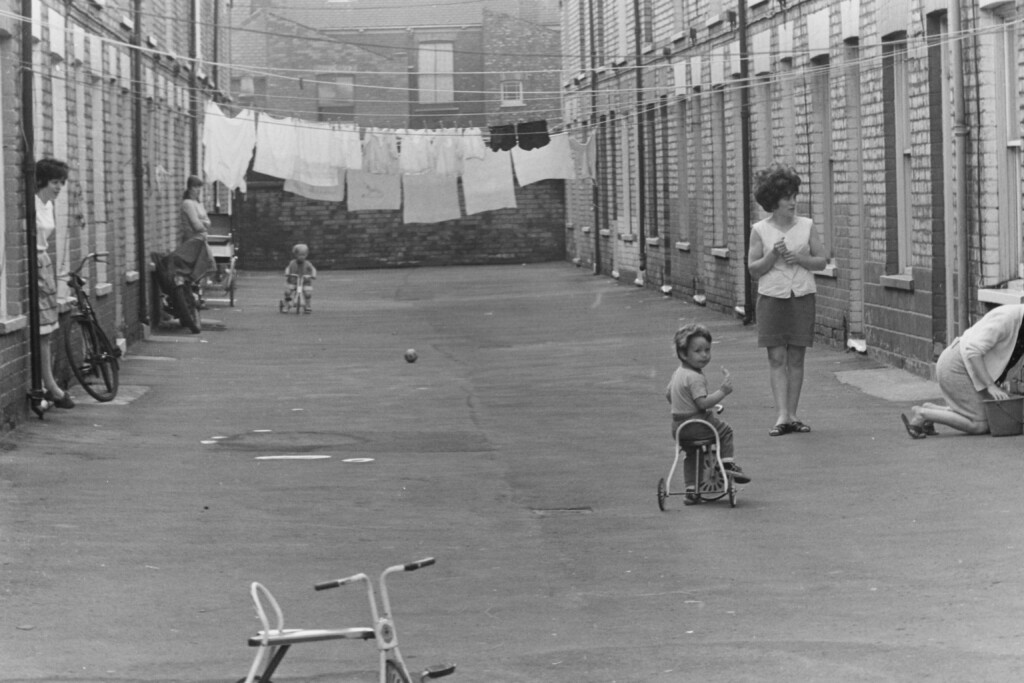
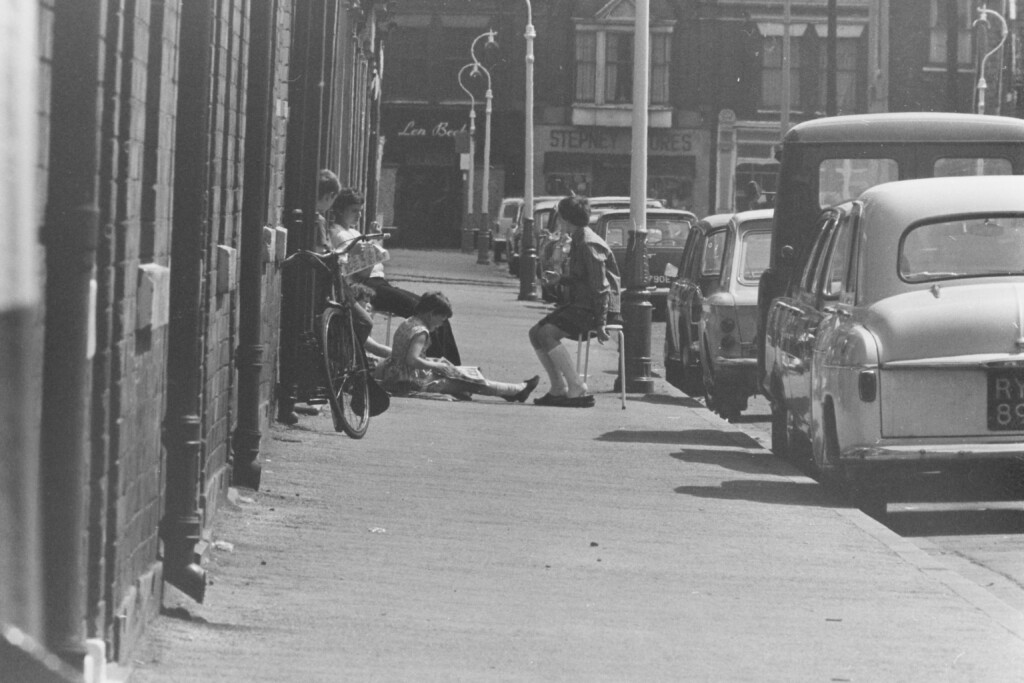
In 1968, Robert Whitaker travelled to Hull, in East Yorkshire, to photograph a small working-class street that would become the subject of one of the most celebrated debut poetry collections of its time.
The project was connected to Scottish poet Douglas Dunn, whose experiences of living in Terry Street had inspired a remarkable series of poems about ordinary people, domestic life and the realities of working-class Britain.
The resulting photographs by Robert would provide a visual counterpart to Dunn’s writing, capturing a community and a way of life that was already under threat.
It was a very different assignment from Robert’s better-known photographs of The Beatles, rock musicians and international cultural figures. Here, there were no celebrities, concert halls or elaborate photographic settings. Instead, Robert turned his attention to an ordinary street, its houses, its residents and the details of everyday existence.
The result was a compelling documentary record of a Britain that was changing rapidly.
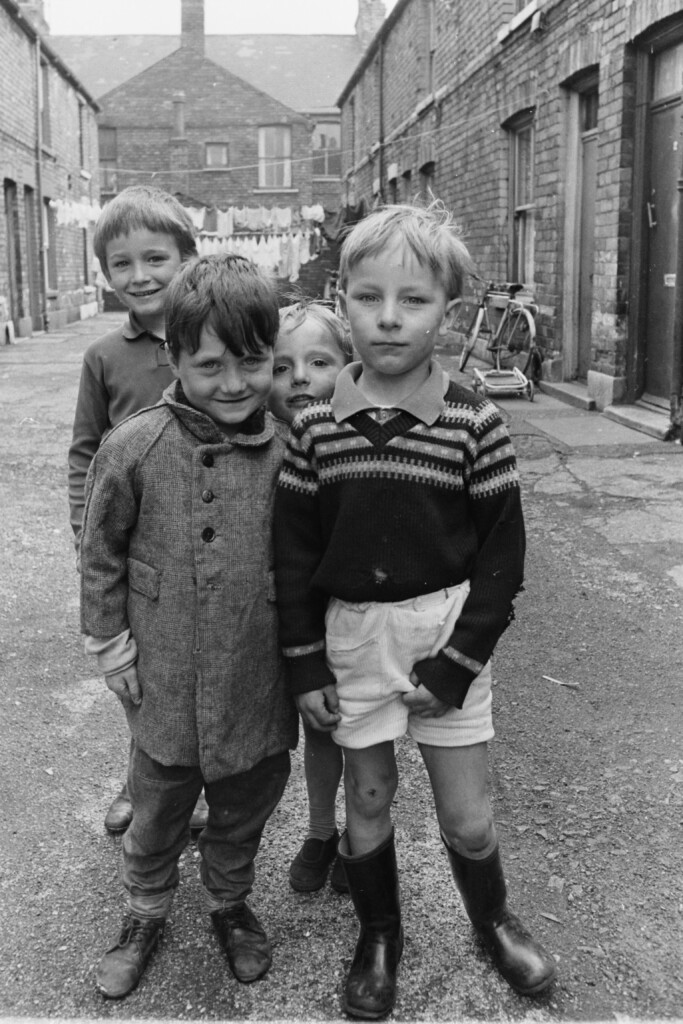
Douglas Dunn and the origins of Terry Street
Douglas Dunn arrived in Hull in 1966 to study English at the University of Hull. He had come partly because of his admiration for the poet Philip Larkin, who was then the university’s librarian and an established literary figure.
Dunn and his wife settled in Terry Street, a small terraced street off Beverley Road. They purchased a house for approximately £250 and lived there for two years.
The neighbourhood was a modest, densely populated working-class area. Its houses were in poor condition, and the street had been designated as unfit for human habitation. The buildings were part of an older urban landscape that was increasingly threatened by demolition and redevelopment.
For Dunn, however, the street became an extraordinary source of inspiration.
He observed his neighbours, their routines, their conversations and their relationships. He wrote about men returning from work, children playing, domestic interiors, the passage of time and the small dramas of everyday life.
His poetry was neither sentimental nor romantic. Dunn was interested in people as they really were: sometimes funny, sometimes difficult, occasionally lonely, but always recognisably human.
Terry Street became a portrait of an entire community through the observation of one particular place.
Robert Whitaker’s arrival in Hull
The photographic assignment came about through Alan Ross, editor of The London Magazine, who recognised the potential relationship between Dunn’s poems and documentary photography.
Ross commissioned Robert Whitaker to photograph the area, providing a visual accompaniment to Dunn’s writing.
Robert travelled to Hull in 1968 and spent time photographing Terry Street and its surroundings.
Douglas Dunn later recalled his initial reservations about the arrival of the photographer, his girlfriend and their sports car in the neighbourhood. He wondered how Robert would get on with the local residents.
It was an understandable concern. Robert was arriving from a very different world, having already established himself as a successful photographer in London and worked with some of the biggest names in popular culture.
Yet he approached the assignment with the same curiosity and observational instinct that characterised much of his photography.
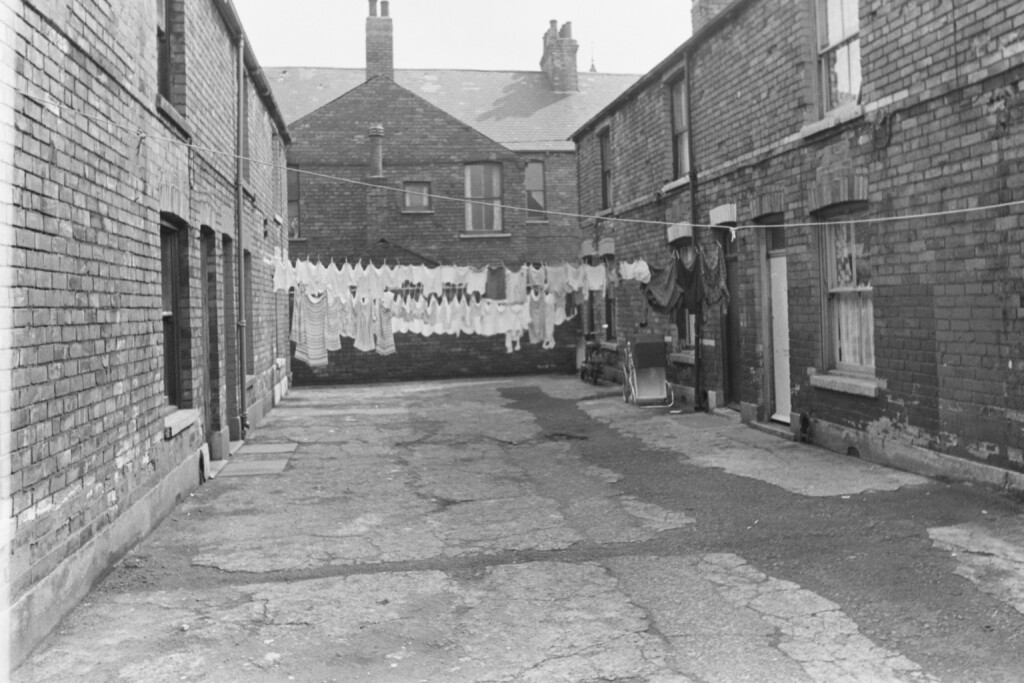
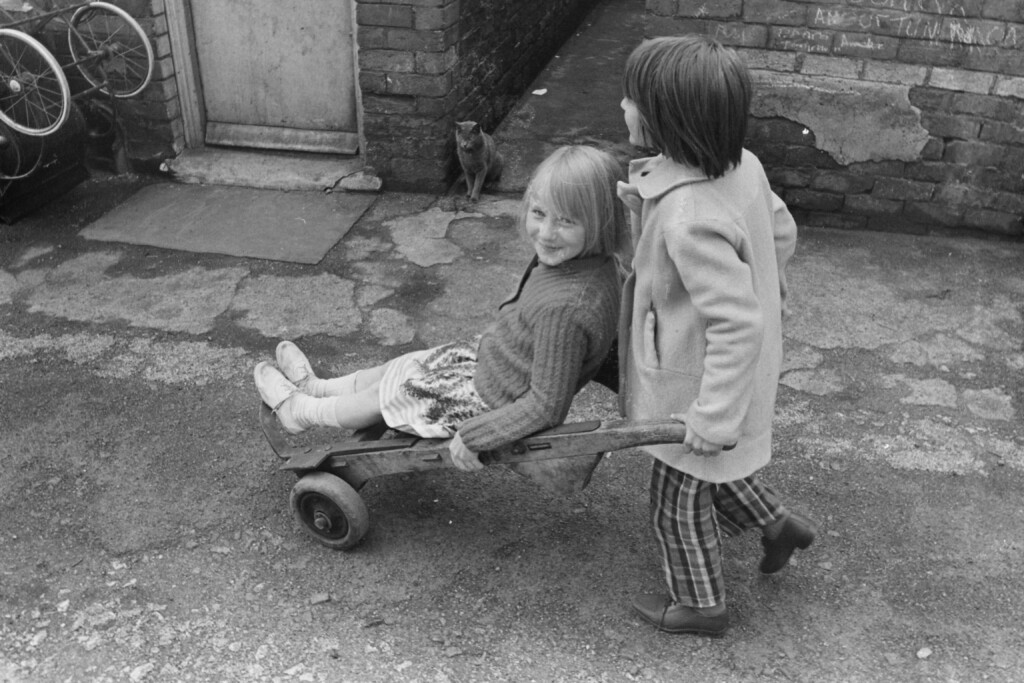
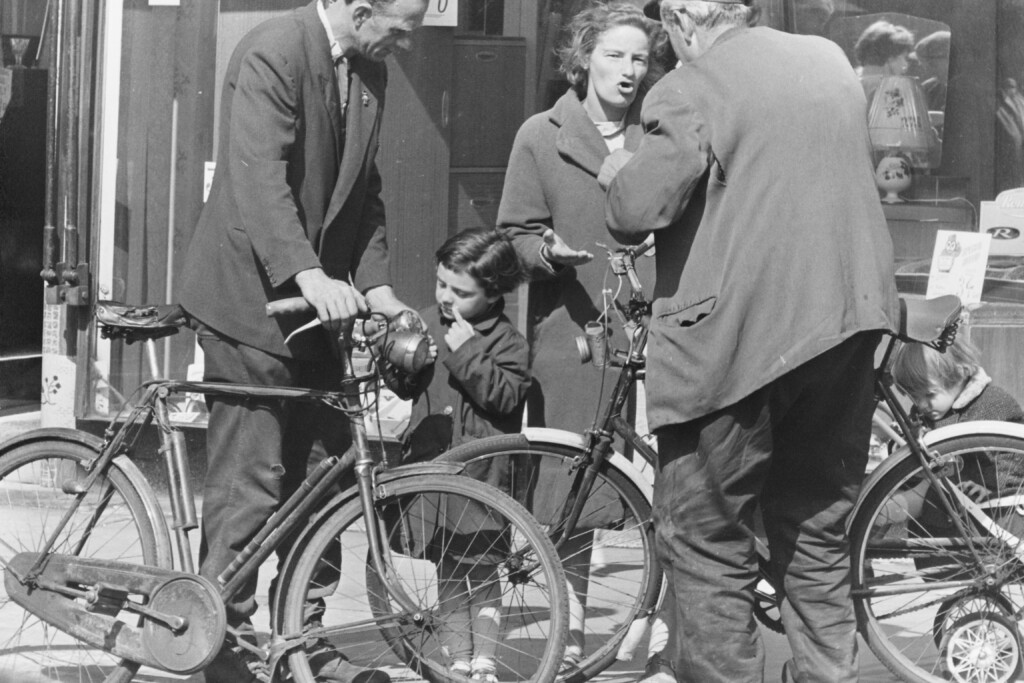
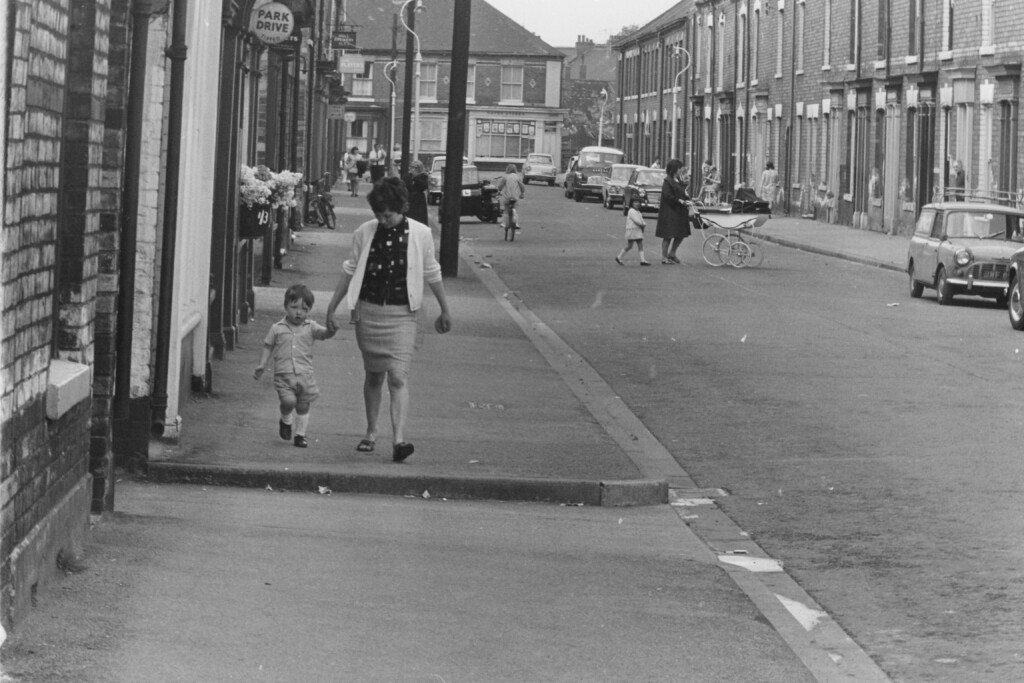
His photographs captured the physical environment of the street, but also its human character. The residents, their houses, gardens, children, possessions and everyday activities became part of a wider visual story.
There is an extraordinary quality to these images. They do not attempt to make the area look more attractive than it was, nor do they turn its residents into objects of pity. Instead, they offer an honest and often affectionate record of ordinary life.
Photography and poetry
The relationship between Robert’s photographs and Dunn’s poetry is particularly important.
Both artists were interested in observation rather than spectacle. Dunn used words to describe the people and places around him, while Robert used his camera to record the visual details that might otherwise have gone unnoticed.
Together, their work created a portrait of Terry Street that neither could have produced alone.
The photographs were not simply illustrations of the poems. They offered another way of understanding the same environment, adding faces, textures, buildings and visual details to Dunn’s written observations.
The collaboration also demonstrated Robert’s ability to work outside the conventional boundaries of commercial photography.
He could photograph The Beatles, Salvador Dalí and international musicians, but he could equally turn his attention to an overlooked street in Hull and recognise the importance of recording its everyday life.
The publication of Terry Street
Douglas Dunn’s first collection, Terry Street, was published by Faber and Faber in 1969.
It was an important debut, establishing Dunn as a distinctive new voice in British poetry. The collection received considerable critical attention and went on to win both a Scottish Arts Council Book Award and the Somerset Maugham Award.
Philip Larkin played an important part in bringing Dunn’s work to the attention of Faber. He helped arrange the poems into the sequence in which they appeared in the book, while the title was given by Faber’s poetry editor Charles Monteith.
The book offered a remarkably intimate portrait of a working-class community at a time when traditional urban neighbourhoods were undergoing considerable change.
Although Robert’s photographs were associated with the earlier magazine presentation of Dunn’s work, their story did not end with the original publication.
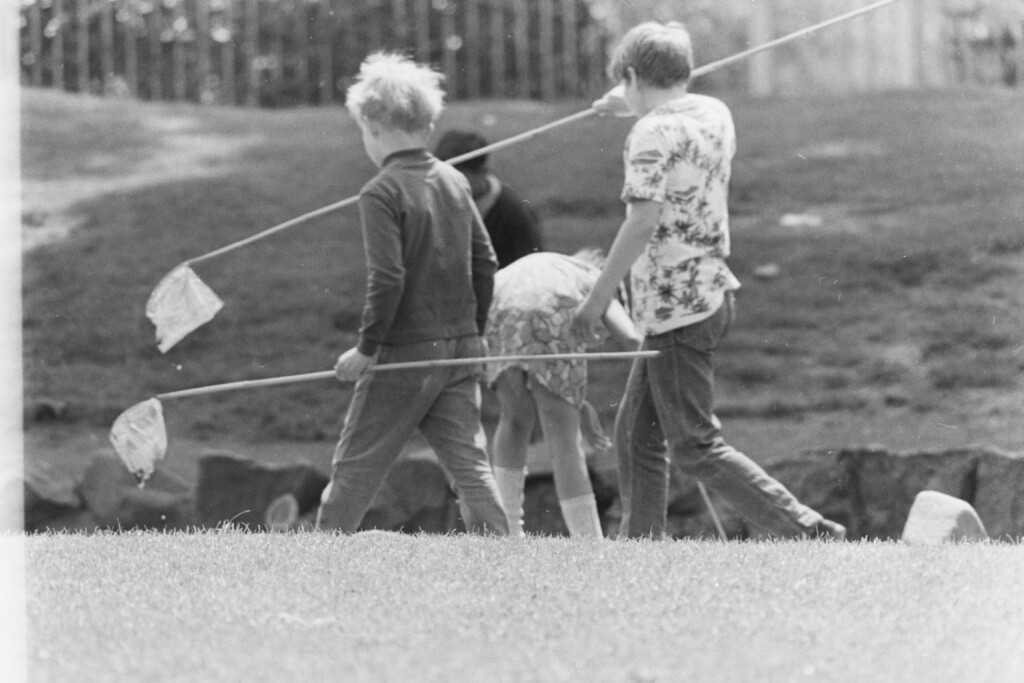
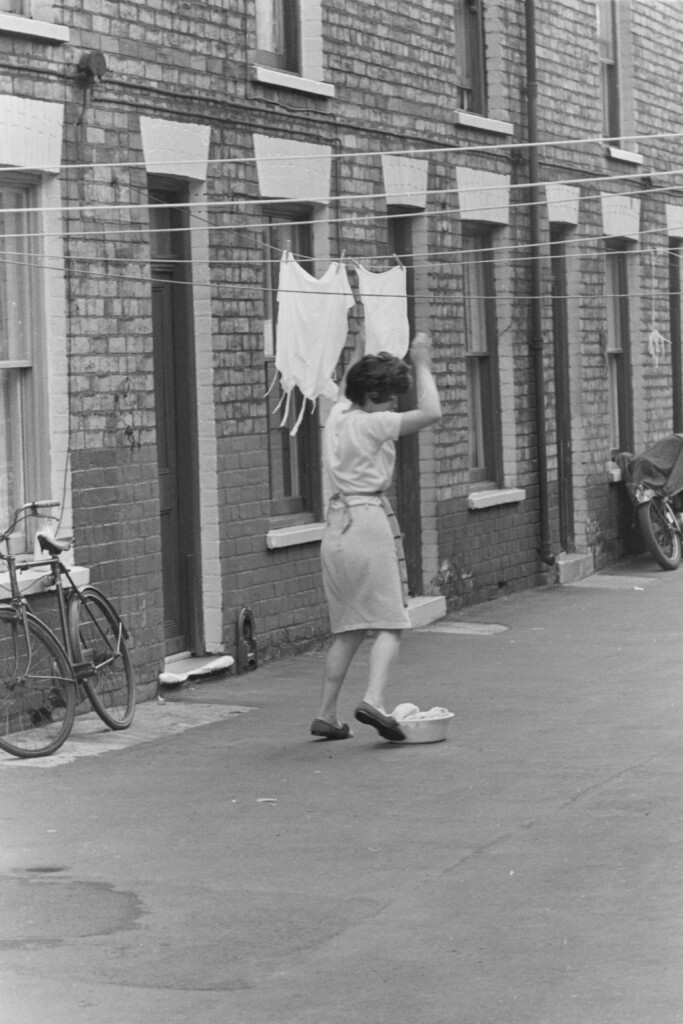
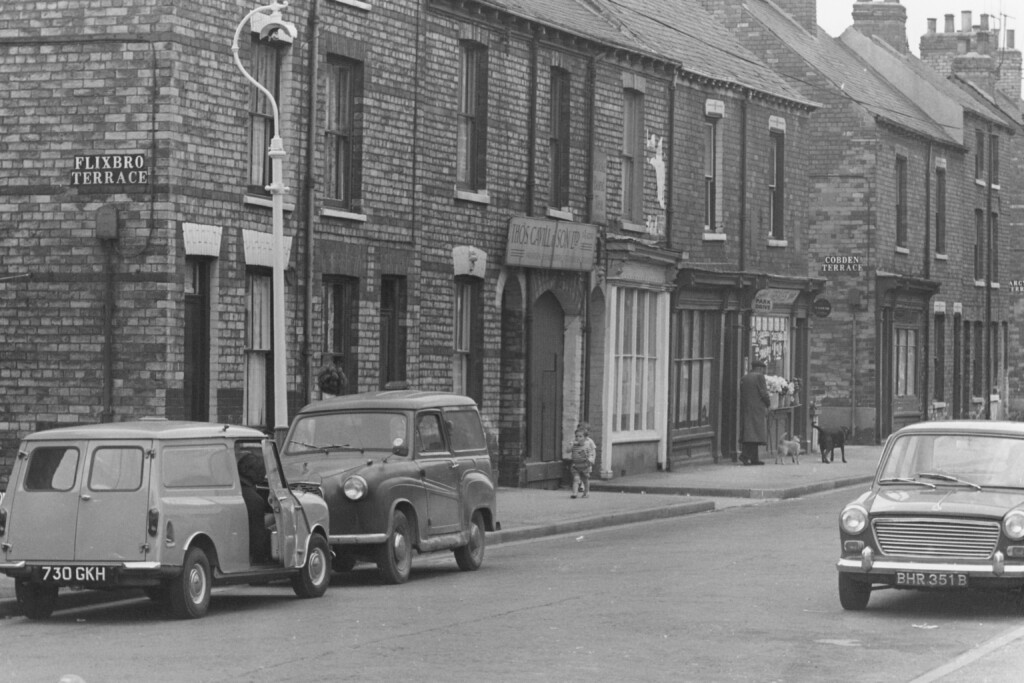
Rediscovering Terry Street
More than twenty-five years later, Robert’s photographs were rediscovered as an important historical record of the area.
In 1994, Dr John Osborne of the University of Hull contacted Robert about the photographs. Osborne had initially believed that the photographer had died while working in Vietnam, but discovered that Robert was alive and still held previously unpublished images from the Terry Street assignment.
This led to a renewed interest in the photographs and their historical importance.
In 1996, an exhibition at Hull’s Ferens Art Gallery brought the images back to public attention. A special edition of Douglas Dunn’s Terry Street, incorporating Robert’s photographs, was also published by Hull Museums.
The photographs had become more than a record of an individual photographic commission. They were now an important piece of Hull’s social history.
The street itself had disappeared through redevelopment, making Robert’s negatives an especially valuable record of the people and surroundings that had once defined the neighbourhood.
A different side of Robert Whitaker
Today, Robert Whitaker is perhaps best remembered for his photographs of The Beatles, particularly the controversial Yesterday and Today album cover, as well as his portraits of Salvador Dalí, musicians and artists.
However, the Terry Street photographs reveal another side of his work.
They demonstrate his interest in people and society beyond the world of celebrity. His camera was equally capable of finding significance in an ordinary street, a domestic scene or an unremarkable moment in somebody’s day.
There is a strong documentary sensibility running through these images, anticipating the kind of historical and social importance that would become increasingly apparent as the years passed.
Robert photographed Terry Street in 1968, but the photographs have allowed later generations to see a community that would otherwise have existed largely in memory.
The collaboration with Douglas Dunn remains a particularly successful meeting of two creative disciplines: poetry and photography, each offering a different interpretation of the same place.
What began as a magazine commission became a lasting visual and literary portrait of working-class life in Britain.
Terry Street may have disappeared, but through the words of Douglas Dunn and the photographs of Robert Whitaker, its people and their world remain.
Historical sources and further reading
The following sources are particularly useful for documenting this project:
- Robert Whitaker Photography – Official biography — confirms the 1969 Terry Street assignment.
- Curiosity Hull – Why Was A Vietnam War Photographer Taking Snaps In Hull? — excellent local historical account of Robert’s photographs and their rediscovery.
- Photopoetry 1845–2015: A Critical History — academic discussion of the relationship between Robert’s photographs and Dunn’s poetry.
- Douglas Dunn in conversation — Dunn discusses living in Terry Street and the photographs.
- WorldCat – Terry Street, Douglas Dunn — bibliographic record of the 1969 book.