
The International Poetry Incarnation is an especially important subject for the Robert Whitaker Archive. It brings together several major figures of the Beat Generation, the emerging British underground and the international avant-garde at a defining moment in 1960s cultural history.
The night the underground came together
On Friday, 11 June 1965, London’s Royal Albert Hall became the setting for one of the most extraordinary cultural gatherings of the decade.
The International Poetry Incarnation brought together approximately 7,000–7,500 people for an evening of poetry, performance, music and experimentation. It was an event that united the American Beat Generation with British underground poets, European experimental writers and a new generation of artists and cultural outsiders.
Organised in an extraordinary ten-day period, the gathering was not simply a conventional poetry reading. It was a declaration that a new cultural movement was emerging.
The Royal Albert Hall’s own historical catalogue describes the occasion as one of the first major British happenings, bringing together beatnik culture and the emerging hippie movement.
The event would subsequently become recognised as one of the defining moments in the development of Britain’s 1960s counterculture.
For Robert Whitaker, photographing this gathering meant documenting a remarkable collection of personalities at a moment when literature, music, film and underground culture were beginning to converge.
The poets, performers and personalities
Robert’s photographs identify several of the evening’s most important participants.
Allen Ginsberg (1926–1997)
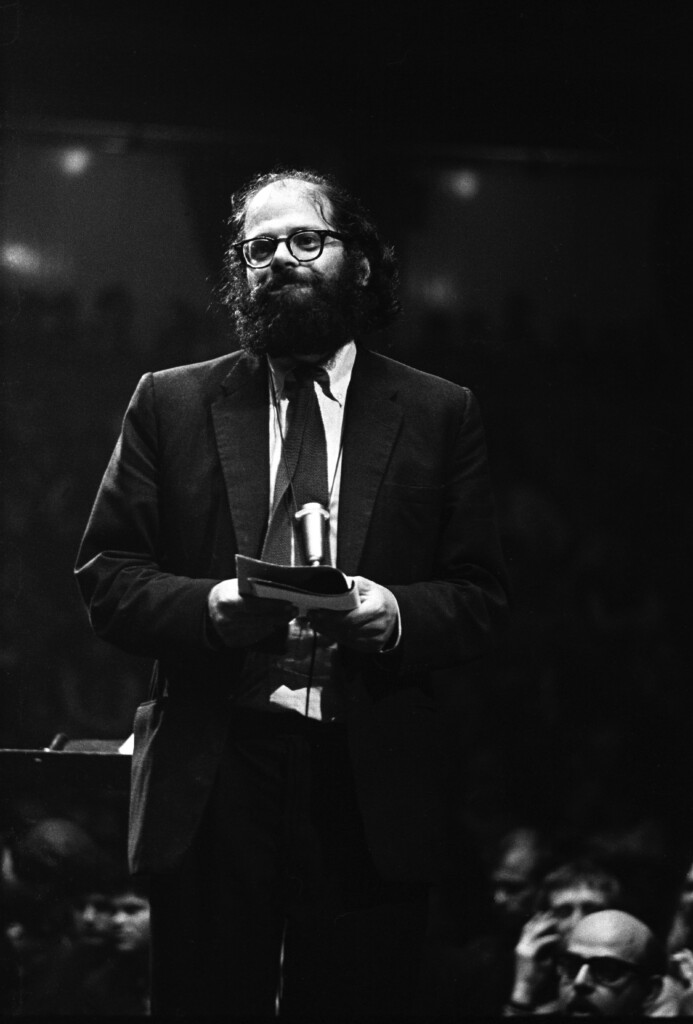
The American poet was arguably the central personality of the evening. Ginsberg had become internationally famous through Howl, his landmark 1956 poem, and was one of the leading voices of the Beat Generation.
In Robert’s first photograph, Ginsberg stands at the microphone wearing a suit. He performed chants and read his own poetry, including The Change and Who Be Kind To.
He also read New York Bird, a poem by Russian poet Andrei Voznesensky, who was present but was prevented by Soviet authorities from performing himself. The Royal Albert Hall’s historical performance record confirms these details. catalogue.royalalberthall.com
Alexander Trocchi (1925–1984) and Gregory Corso (1930–2001)
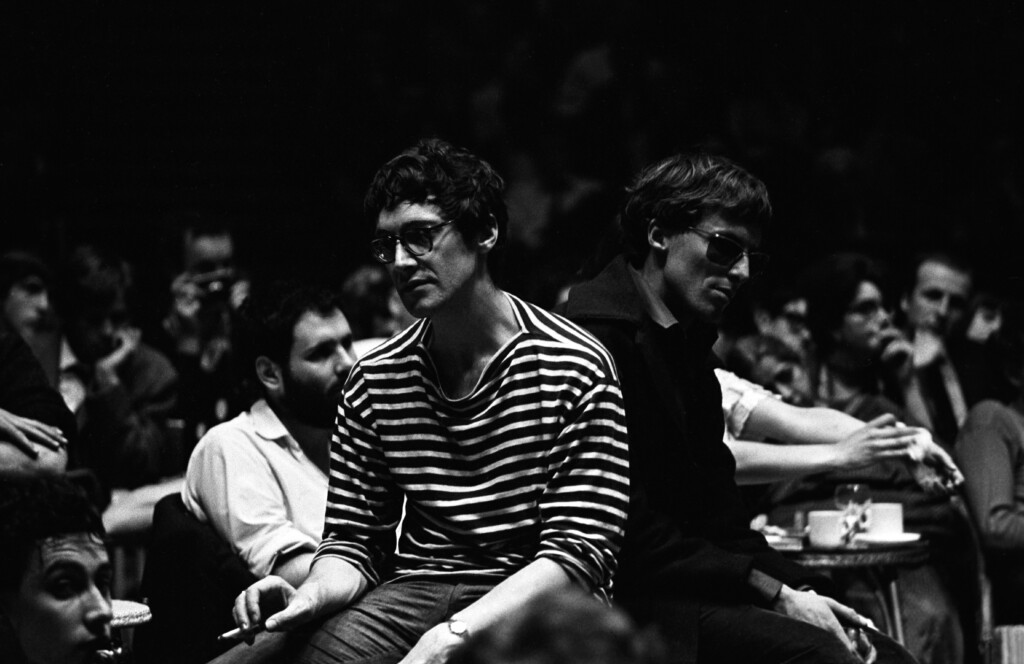
Two important figures of the Beat and underground movements.
Alexander Trocchi, the Scottish novelist and countercultural writer, acted as master of ceremonies. He helped bring the event together with Michael Horovitz and other organisers.
Beside him sits Gregory Corso, one of the original American Beat poets, whose spontaneous, irreverent poetry made him a defining personality of the movement.
Corso was closely associated with Ginsberg, Jack Kerouac and William S. Burroughs. His work combined humour, surrealism and a rebellious approach to traditional literary conventions.
Harry Fainlight (1935–1982)
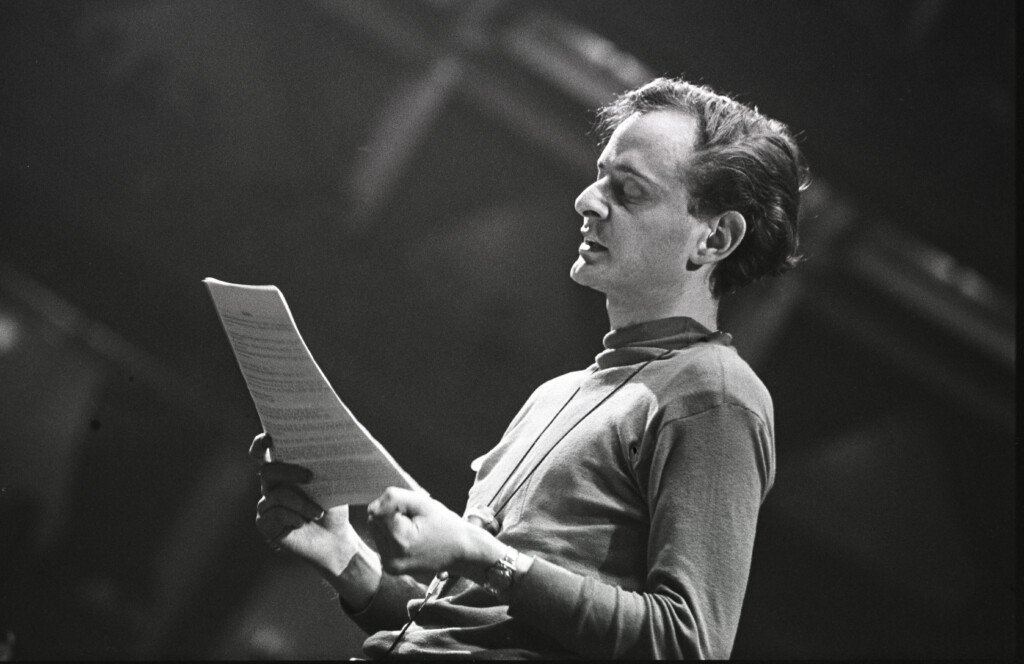
Fainlight is seen reading in profile, wearing a dark turtleneck.
Fainlight was a British-American poet whose work was closely associated with the Beat movement. His poem The Spiderbecame one of the memorable performances associated with the evening.
He was part of the generation of poets who challenged conventional literary forms and helped bring experimental poetry into the wider public consciousness.
Barbara Rubin (1945–1980)
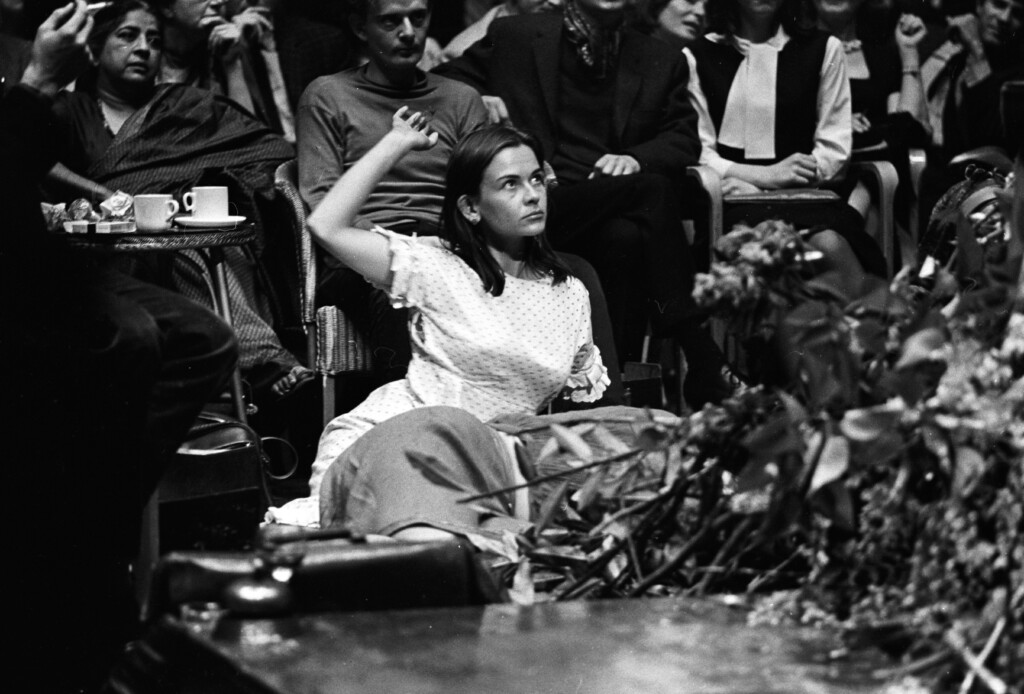
Barbara Rubin was an American experimental filmmaker and an important organiser behind the gathering. She had arrived in London with Allen Ginsberg and was instrumental in turning the idea of a large international poetry event into reality.
She was already known for her radical experimental film Christmas on Earth (1963), an influential work of underground cinema.
In Robert’s photograph, she is seated on the floor, surrounded by flowers. Harry Fainlight can be seen behind her, while Indira Gandhi is visible in the background.
Indira Gandhi’s attendance is independently confirmed by the Royal Albert Hall’s historical record.
Simon Vinkenoog (1928–2009)
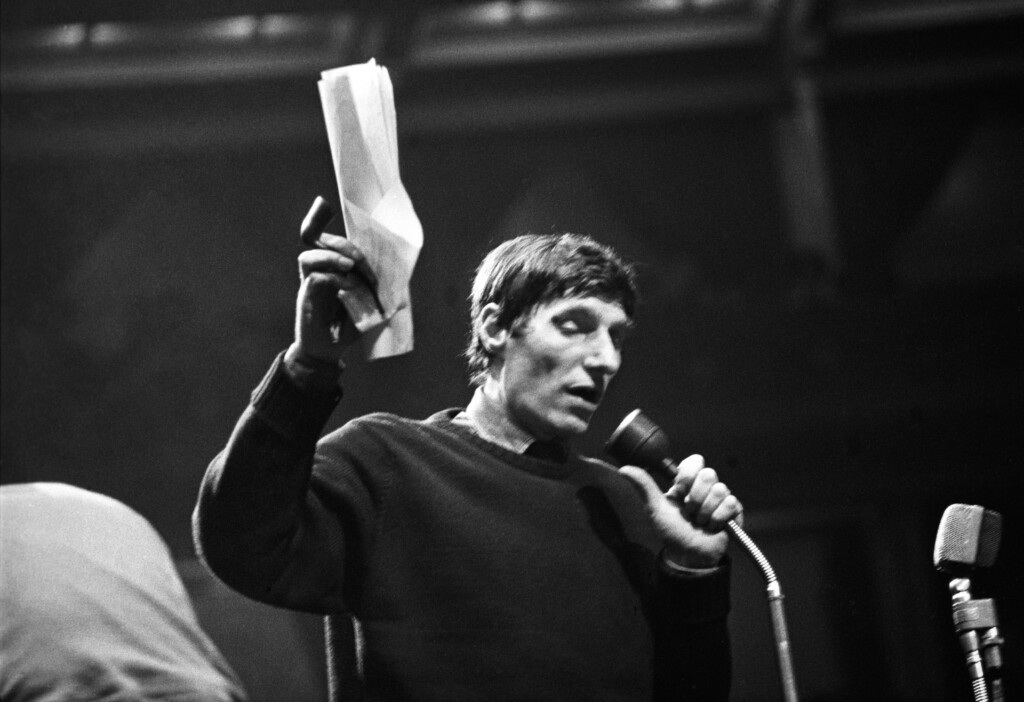
Dutch poet Simon Vinkenoog holding papers aloft and speaking into a handheld microphone.
Vinkenoog was a leading figure in the European avant-garde and counterculture. His poetry and performances were known for their energy, spontaneity and strong sense of audience participation.
The Royal Albert Hall’s programme confirms his participation and lists his poem among the evening’s performances. catalogue.royalalberthall.com
An extraordinary audience
The audience was almost as remarkable as the performers.
Among those attending were Indian Prime Minister Indira Gandhi, Mick Jagger and Marianne Faithfull.
The event is also associated with the beginning of Jagger and Faithfull’s relationship. The Royal Albert Hall’s archive specifically records their meeting at the gathering.
Thousands of young people arrived carrying flowers, many dressed in the emerging styles of London’s bohemian and underground communities.
The organisers distributed flowers at the entrance, and the atmosphere inside the hall was unlike anything the venue had previously experienced.
There was no conventional running order. Poetry, chanting, music and spontaneous performances continued for approximately four hours.
The film: Wholly Communion
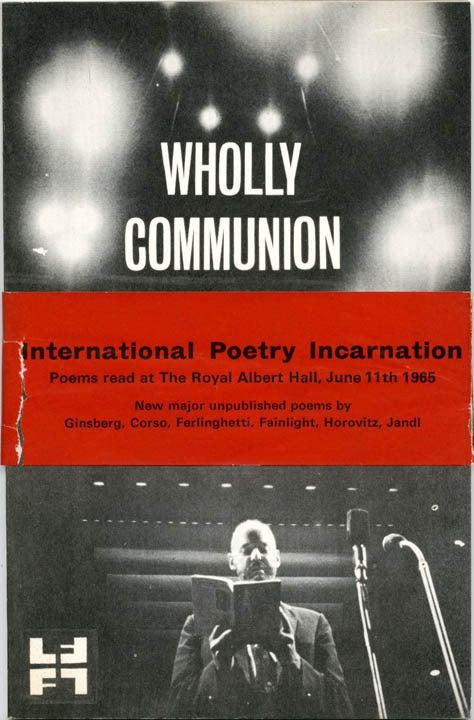
The evening was also documented by filmmaker Peter Whitehead, whose film Wholly Communion became one of the most important surviving visual records of the event.
Whitehead’s black-and-white documentary captured performances by Ginsberg, Ferlinghetti, Corso, Fainlight, Jandl and others.
Rather than presenting a conventional documentary, Whitehead created an immediate and often restless film, using close-ups, rapid camera movements and fragments of performance to convey the atmosphere inside the hall.
The film was released in 1966 and remains an important document of the emerging British underground.
A companion book, also titled Wholly Communion, was published by Grove Press in 1965, with photographs by Peter Whitehead.
A photographic record of a cultural turning point
The significance of the International Poetry Incarnation extended well beyond the evening itself.
Before 1965, London’s alternative cultural scene was relatively fragmented. Poets, artists, filmmakers, musicians and political activists often operated within their own small communities.
The gathering demonstrated that these individuals shared a much larger audience and a common interest in challenging established cultural conventions.
John ‘Hoppy’ Hopkins, himself a photographer and one of the leading figures of the underground movement, later described the experience of walking into the hall and discovering thousands of people who shared similar interests.
The event helped establish the confidence and connections that would lead to the creation of International Times in 1966 and the UFO Club in 1966–67.
It also helped establish the wider network of artists, writers and musicians that would define the psychedelic era.
The importance of this cultural moment was recognised by the Times Literary Supplement, which praised the event in its 17 June 1965 issue for making literary history through its combination of flair, courage and opportunity. Contemporary newspaper reports also appeared in The Times and The Daily Telegraph. catalogue.royalalberthall.com
Further archival research and publication references
Several particularly useful resources for documenting this collection:
- Royal Albert Hall – Official International Poetry Incarnation record. Includes performers, set list, contemporary reviews, attendance and archival references.
- The Guardian – Snapshot: Allen Ginsberg at the Albert Hall (2005). Retrospective account featuring a photograph by John Hopkins.
- Bishopsgate Institute – The Hoppy Hopkins Archive. An extensive archival finding aid.
- Wholly Communion – Original 1965 publication. The companion book with photographs by Peter Whitehead.
- Hoppy X – International Poetry Incarnation photographs. A useful comparison archive of photographs attributed to Hopkins.