
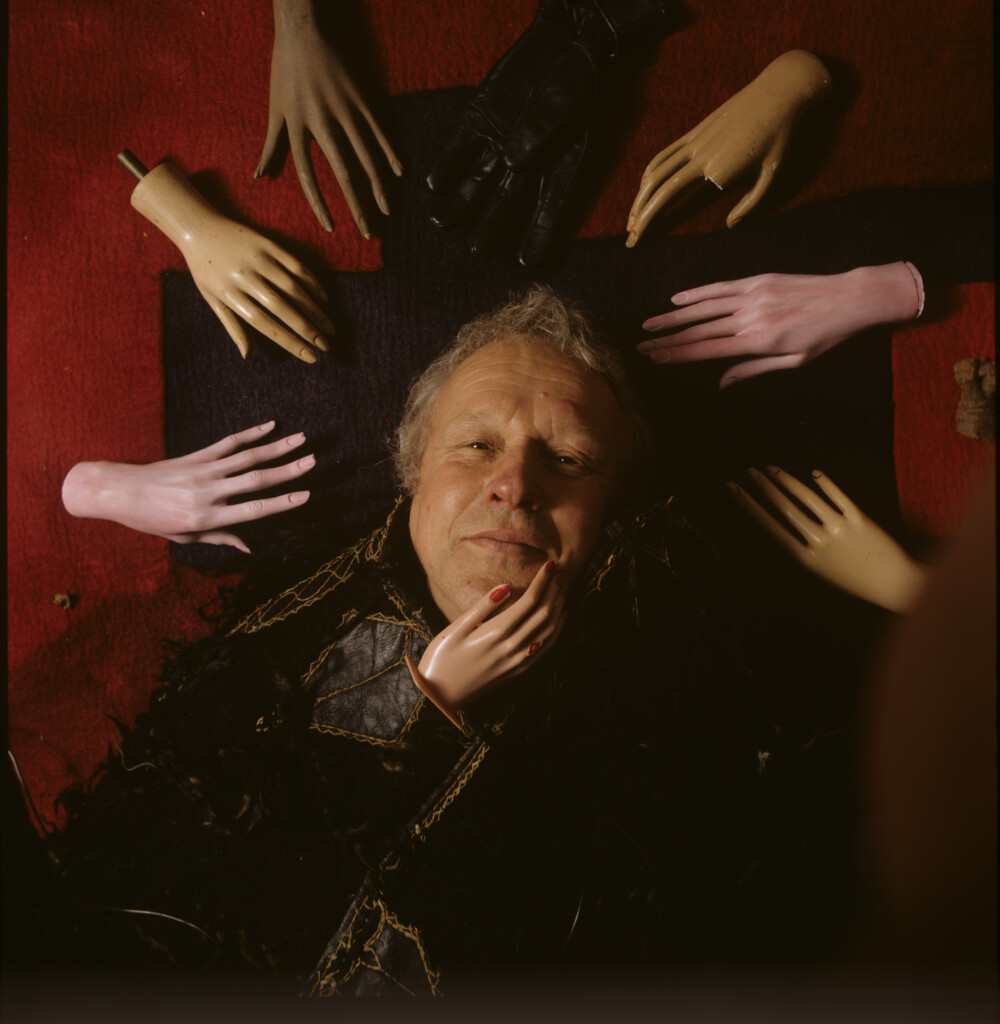
The photograph of Stuart Brisley, taken by Robert Whitaker on 20 November 1995, records a meeting between two individuals whose creative paths had crossed over several decades. Brisley, born in 1933, was an important figure in the development of British performance and installation art. His work explored the physical body, endurance, human vulnerability and the relationship between the individual and society.
His association with Whitaker is particularly interesting because it reaches back to the experimental artistic environment of the 1960s, when photography, performance, surrealism and popular culture frequently intersected.
Early beginnings: the 1965 Beatles sessions
One of the most fascinating chapters in Brisley’s connection with Whitaker dates from 1965, when Whitaker was developing a series of increasingly experimental photographic sessions with The Beatles.
At the West Hampstead studio in Sheriff Road, London, Whitaker brought together photography, theatrical set design and surrealist ideas to create images that moved well beyond conventional pop-group portraiture. Brisley was involved in the creative construction of the sets, working alongside theatrical decorator Carol Russell.
The sessions incorporated unusual materials and reflective surfaces, including mirrors, silver foil, polyethylene film and polystyrene blocks. These materials transformed the studio into an experimental environment in which the band could be photographed within carefully constructed visual tableaux.
The resulting photographs included images subsequently used for the Beatles’ British Yesterday EP and their 1966 American tour programme. The session also demonstrated Whitaker’s willingness to involve artists and designers from outside the conventional world of commercial photography.
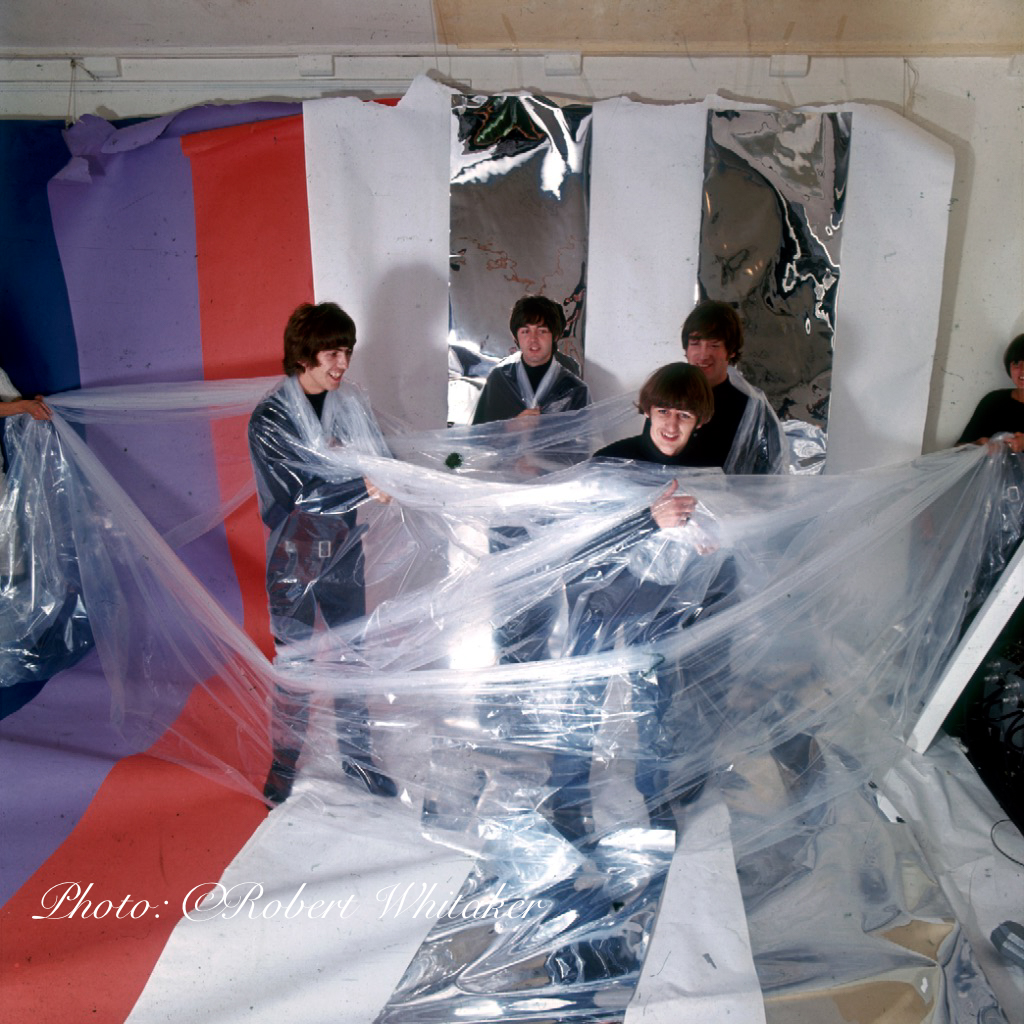
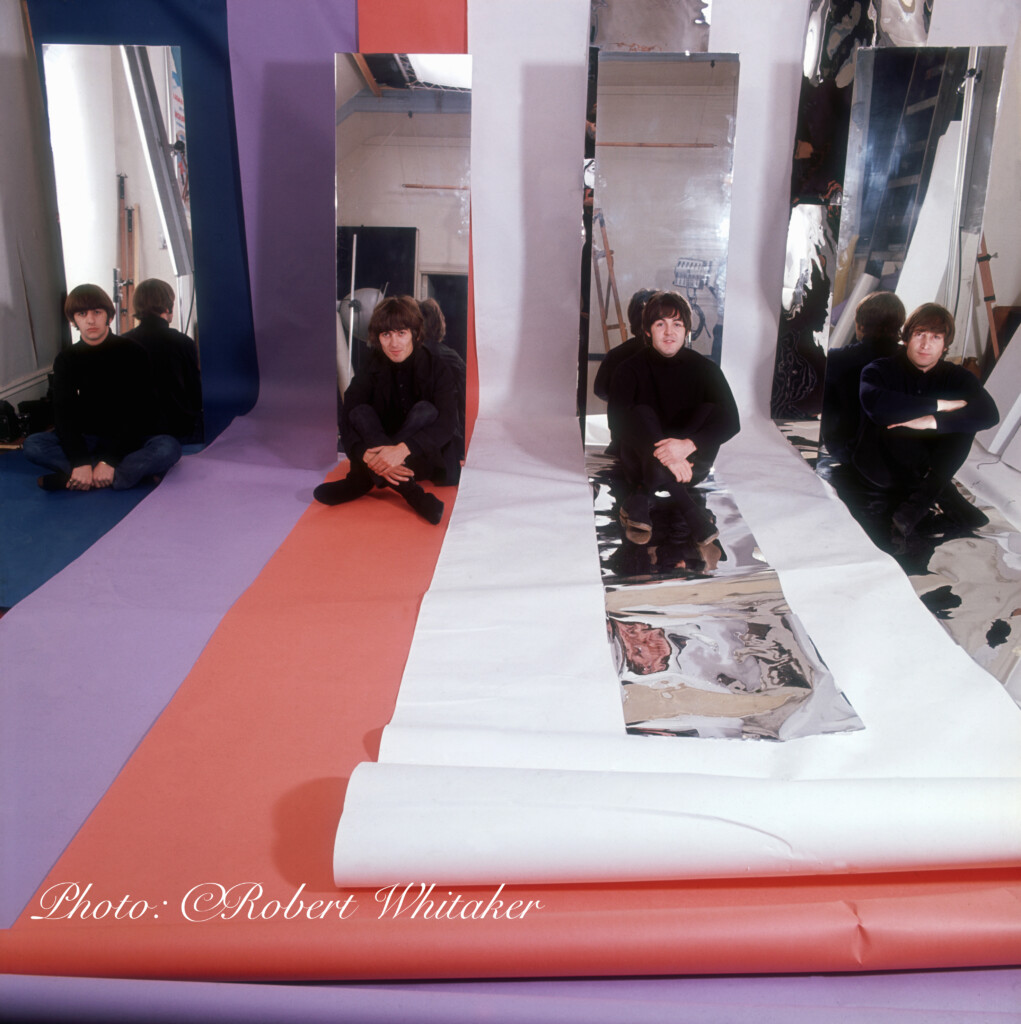
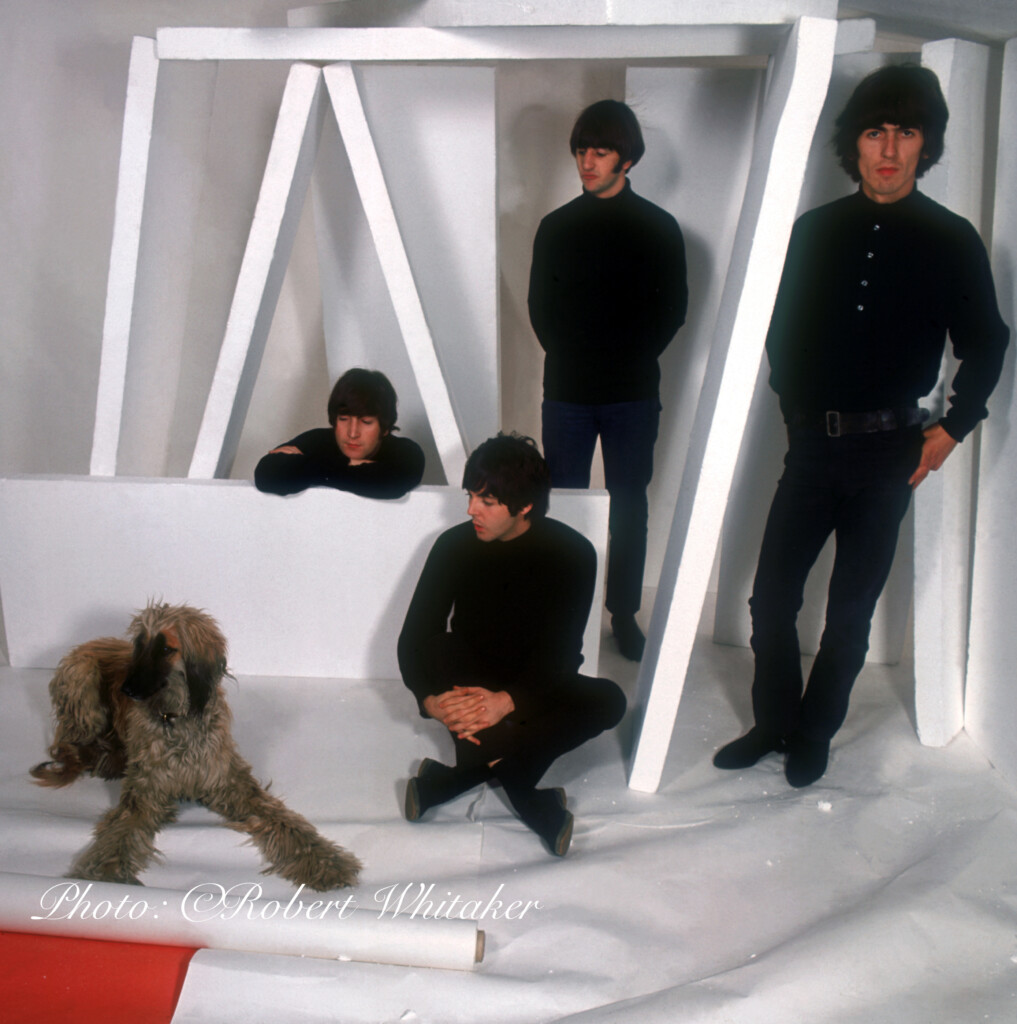
For Brisley, this early association with Whitaker belongs to a period of artistic experimentation in which established boundaries between disciplines were becoming increasingly fluid. Although his later reputation would be built primarily on performance and installation, his involvement in these photographic constructions reveals an earlier connection with the visual experimentation of the 1960s.
The development of a radical artistic practice
Born in Haslemere, Surrey, in 1933, Brisley studied at Guildford School of Art between 1949 and 1954, followed by the Royal College of Art in London from 1956 to 1959. He subsequently studied at the Akademie der Bildenden Künste in Munich and Florida State University in the United States.
Over the following decades, he developed a challenging and uncompromising artistic practice that placed the human body at its centre. His performances frequently involved physical endurance, discomfort, repetition and exposure, confronting audiences with questions about human existence, social structures and the limits of the body.
Brisley became particularly associated with the emergence of British performance art during the 1960s and 1970s. Rather than treating art as an object to be observed, he used the presence and actions of the artist as the work itself. The audience was no longer simply looking at an artwork; it was witnessing an event that could be uncomfortable, unpredictable and sometimes deeply unsettling.
One of his best-known performances, And For Today, Nothing (1972), involved Brisley lying in a bathtub containing decomposing matter for extended periods over ten days at Gallery House in London. The work confronted viewers with ideas of bodily vulnerability, decay and the social treatment of waste.
Another important work, 12 Days (1975), involved an extended performance in Rottweil, Germany, in which a structure was built, inhabited and eventually destroyed. The documentation of this performance illustrates Brisley’s interest in time, physical endurance and the relationship between the body and its surroundings.
An artist engaged with society
Brisley’s work was never concerned solely with physical spectacle. Throughout his career, he maintained a strong interest in political and social questions, particularly class, labour, institutional authority and the lives of people who existed on the margins of society.
He was a founding member of the Artists’ Union and participated in the 1968 Hornsey College of Art sit-in, a significant protest against the way art education was organised and administered in Britain.
He also became involved in community-based artistic projects, including the Peterlee Project (1976–77), which explored local history and collective memory. His work increasingly incorporated sculpture, drawing, film, sound, writing and large-scale installations.
Brisley later became Professor of Media Fine Art Graduate Studies at the Slade School of Fine Art, University College London. His influence extended to a generation of younger British artists, including Mona Hatoum and Douglas Gordon.
Robert Whitaker and Stuart Brisley – a lasting creative connection
The photograph taken on 20 November 1995 is particularly significant within the Robert Whitaker archive because it documents a relationship that began during the experimental years of the 1960s.
Whitaker’s photographic career was characterised by an interest in individuals who challenged conventional ideas of art, culture and visual expression. His collaborations with artists, designers, musicians and writers frequently brought together people from different creative disciplines.
Brisley was part of this wider artistic world. His contribution to the 1965 Sheriff Road sessions with The Beatles illustrates how Whitaker drew upon the talents of other creative practitioners to realise his photographic ideas.
By November 1995, approximately thirty years had passed since those early collaborations. The portrait therefore offers an interesting opportunity to reconnect two periods in their shared creative history: the experimental London art and music scene of the 1960s and the more established contemporary art world of the 1990s.
Brisley’s work continued to develop throughout this period. In 1996, shortly after Whitaker photographed him, he was the subject of Black, an exhibition at the South London Gallery, reflecting the continuing importance of his work within British contemporary art.
Further research and archive references
These are useful sources for expanding the historical record:
- Stuart Brisley – Official Biography – Education, career, artistic philosophy and collaborations.
- Robert Whitaker – Official Biography – Whitaker’s own account of the 1965 Beatles sessions.
- National Portrait Gallery – Beatles to Bowie – Historical context for Whitaker’s experimental Beatles photography.
- Tate – Stuart Brisley and Unscheduled Action, 1968 – A detailed examination of his performance practice.
- Tate Archive – Stuart Brisley Papers – Archival documentation of his artistic projects.