
Writer, editor, publisher and pioneer of the international counterculture (1941–2016)
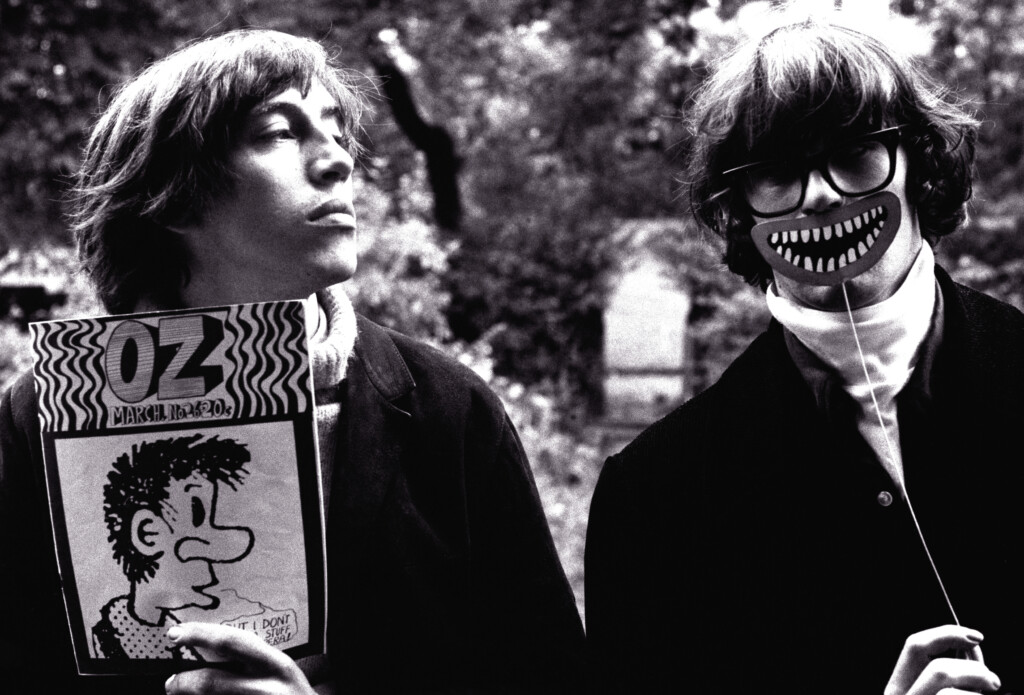
Richard Neville was one of the most influential and unconventional figures of the international counterculture of the 1960s. Australian-born writer, publisher, journalist and self-described futurist, he was the driving force behind Oz, the underground magazine that challenged established attitudes towards politics, sexuality, censorship, popular culture and individual freedom.
His story is closely connected with Robert Whitaker, whose photography became part of the visual history of the magazine and the extraordinary creative community surrounding it. Their association began in Melbourne in the early 1960s and continued in London, where Neville, Whitaker and artist Martin Sharp became involved in the creation of the British edition of Oz.
For Whitaker, Oz represented much more than another publishing assignment. It was part of a creative movement that brought together artists, photographers, musicians, writers and designers, many of whom would go on to become important figures in international culture.
The beginnings in Australia
Richard Neville was born on 15 December 1941 in Collaroy, Sydney, Australia. He grew up in a relatively privileged environment, attending Knox Grammar School before studying Arts at the University of New South Wales.
He quickly developed a reputation for questioning authority and challenging conventional thinking. While at university, he became involved with the student newspaper Tharunka, where he experimented with satire, provocative writing and unconventional journalism.
It was during this period that he met Richard Walsh, and together they began developing the idea of an independent publication that would challenge the conservative social atmosphere of post-war Australia.
They subsequently joined forces with young artist Martin Sharp, whose extraordinary graphic imagination would become central to the magazine’s identity.
The first issue of Oz appeared in Sydney on 1 April 1963. Approximately 6,000 copies reportedly sold out within three hours.
Initially conceived as a satirical student publication, Oz quickly developed into something much more ambitious. It addressed subjects that mainstream Australian publications were reluctant to discuss, including abortion, homosexuality, racial discrimination, police brutality, the Vietnam War and the changing attitudes of younger generations.
Sharp’s artwork gave the magazine a distinctive visual identity, combining satire, psychedelic imagery, illustration and experimental typography.
Robert Whitaker, Martin Sharp and the Melbourne connection
An important part of Neville’s story is his association with Robert Whitaker.
Whitaker spent approximately three years in Melbourne during the early 1960s, becoming involved with an emerging artistic and bohemian community that included Georges and Mirka Mora, Germaine Greer, Barry Humphries, Martin Sharp and Richard Neville.
The National Portrait Gallery of Australia specifically records Whitaker’s friendships with Neville and Sharp during this period.
This Melbourne connection is significant because it establishes that Whitaker and Neville knew one another before the British edition of Oz was established.
Whitaker returned to England in 1964, while Neville and Sharp continued developing their Australian publication. In 1966, Neville and Sharp travelled overland from Australia to London, where they found themselves in the middle of an expanding international counterculture.
By 1967, their paths had converged again.
Whitaker was living at The Pheasantry on King’s Road, Chelsea, a remarkable creative meeting place frequented by artists, musicians and writers. Martin Sharp, one of Whitaker’s close friends, was also living there.
According to Whitaker’s own photographic archive biography, Neville, Sharp and Whitaker became involved in establishing the London edition of Oz.
The first British issue appeared in February 1967.
It was a natural extension of the creative relationships that had developed in Australia. Neville brought the editorial vision, Sharp supplied much of the extraordinary visual imagination, and Whitaker contributed to the photographic environment surrounding the publication.
London Oz – a new underground culture
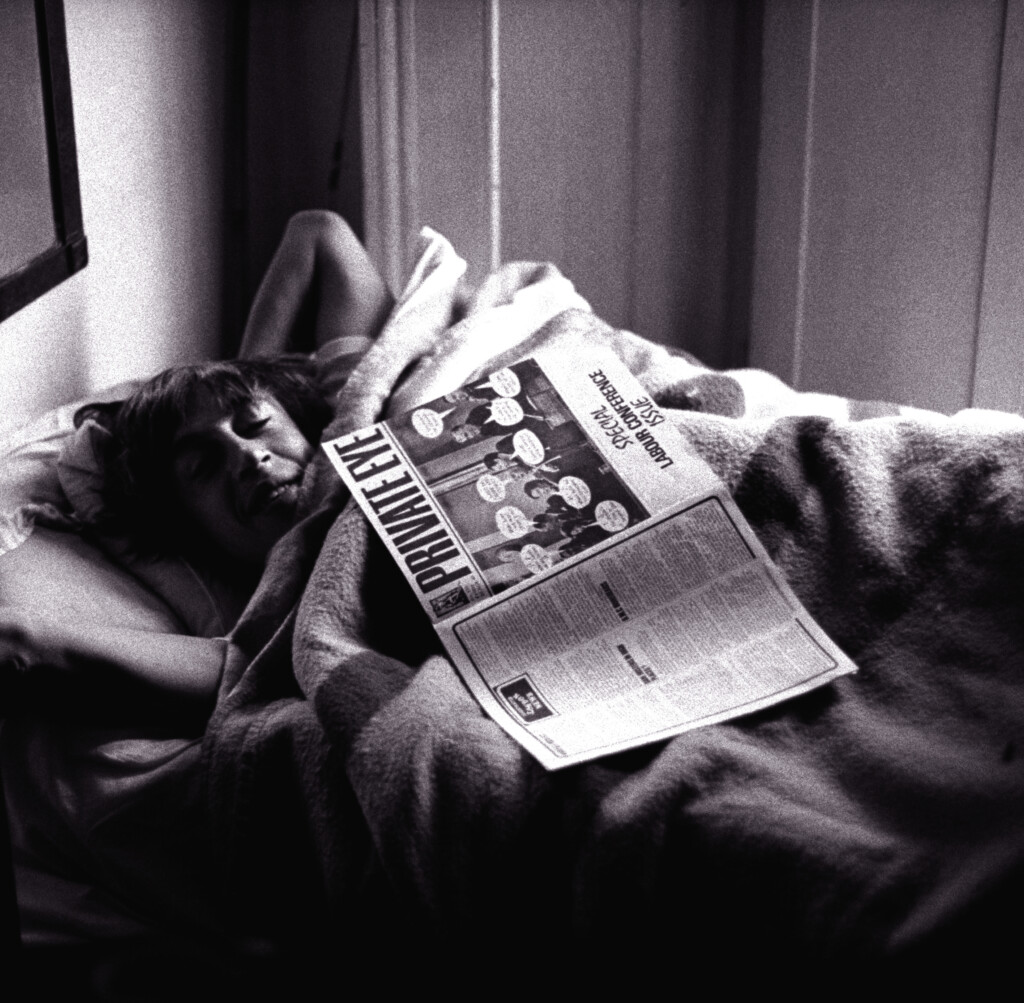
The British edition of Oz quickly established itself as one of the defining publications of the 1960s counterculture.
Published from 1967 until 1973, it combined radical journalism, political commentary, experimental design, psychedelic art, music, humour and social criticism.
Its contributors included Germaine Greer, Robert Crumb, Lillian Roxon, Philippe Mora and numerous writers and artists associated with the emerging underground scene.
Martin Sharp’s covers became particularly influential. His psychedelic compositions, often incorporating elaborate illustrations, vibrant colours and intricate typography, helped make Oz instantly recognisable.
Whitaker’s involvement connected the magazine with a wider photographic and artistic world. His work documented the personalities, musicians and cultural developments that surrounded the publication.
The magazine was never simply a vehicle for entertainment. Neville wanted it to challenge established assumptions and encourage readers to question the society in which they lived.
Its international outlook was particularly important. Australian, British and American ideas flowed through its pages, reflecting a generation increasingly connected by music, travel, art and political dissent.
Play Power – the international youth movement
In 1970, Neville published Play Power, a book examining the emerging international youth movement and the cultural changes taking place around the world.
Part manifesto, part social observation and part exploration of the emerging counterculture, the book examined the relationship between technology, communication, popular culture and changing social attitudes.
Neville was fascinated by the possibilities of the future. He explored subjects including computers, alternative lifestyles, new forms of communication and the growing influence of younger generations.
He described himself as a futurist and believed that the social and technological changes taking place during the 1960s represented the beginning of a much broader transformation.
The book became an important expression of the intellectual ideas behind Oz, extending Neville’s influence beyond magazine publishing.
The Schoolkids Oz trial
The most notorious chapter in Neville’s publishing career came in 1971.
The May 1970 issue of London Oz, commonly known as Schoolkids Oz, had been produced with contributions from schoolchildren. Its controversial contents included a sexually explicit cartoon featuring Rupert Bear.
Neville, Jim Anderson and Felix Dennis were charged with conspiring to corrupt public morals.
The subsequent Old Bailey trial became one of the most widely publicised obscenity cases in British history.
The three editors were initially convicted and imprisoned, prompting widespread protests and demonstrations. Their convictions were overturned by the Court of Appeal in November 1971.
The trial attracted international attention and became a defining confrontation between the authorities and the counterculture.
Artists, writers and musicians rallied behind the editors. John Lennon and Yoko Ono released God Save Oz, drawing further attention to the case.
For Neville, the experience reinforced his commitment to freedom of expression and his opposition to censorship.
Beyond Oz
After the magazine ceased publication in 1973, Neville continued working as a writer, journalist and commentator.
He became increasingly interested in environmental issues, sustainability, technology and the future of society.
His later books included Hippie Hippie Shake (1995), an autobiographical account of his experiences during the counterculture years.
The book provides an important personal record of the people, places and events that shaped the underground movement, including the creation of Oz and the extraordinary journey from Sydney to London.
Neville also became a familiar face on Australian television, appearing on programmes including The Midday Show and developing his own programme, Extra Dimensions, which explored environmental and future-oriented subjects.
He remained an articulate and enthusiastic commentator on social change throughout his later life.
Richard Neville died in Sydney on 4 September 2016, aged 74, following a battle with Alzheimer’s disease.
Robert Whitaker and Richard Neville – an important creative friendship
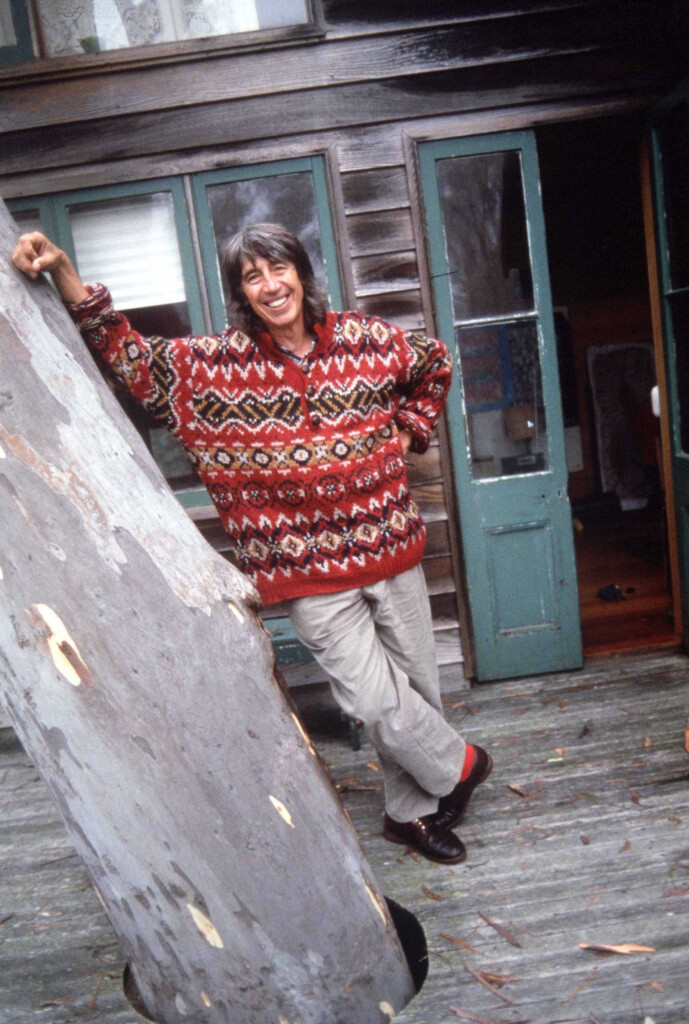
The relationship between Robert Whitaker and Richard Neville is an important part of the history of both men.
Their association began in Melbourne, within a creative community that included some of Australia’s most influential artists and cultural figures.
It continued in London during the psychedelic years, when Whitaker, Neville and Martin Sharp became connected through the establishment of Oz.
The magazine brought together many of the individuals who would define the visual and intellectual character of the late 1960s. It was a place where photography, graphic design, journalism, music and contemporary art existed alongside one another.
Whitaker’s photographs belong to this wider story. His camera documented a generation that was challenging established ideas about art, culture and society, while his friendships and collaborations placed him within the very networks that helped create the movement.
Neville provided much of the editorial vision behind Oz, Sharp gave it its extraordinary visual identity, and Whitaker contributed to the photographic world surrounding