Beyond the Portrait – Robert Whitaker’s Exploration of Photographic Detail
Throughout his career, Robert Whitaker was driven by an instinct to look beyond the obvious. Whether photographing musicians, artists or the events of his time, he possessed an unusual ability to find something unexpected in a subject. His Whitographs represent one of the most distinctive expressions of this curiosity, combining photographic experimentation, technical innovation and an unconventional approach to portraiture.
The origins of the Whitograph can be traced to Whitaker’s fascination with the artist Salvador Dalí, whom he first met in 1967 through the art historian and collector Douglas Cooper. The two developed a close friendship, and Whitaker was given considerable access to Dalí, photographing him at his home in Portlligat, Spain, and during visits to Paris.
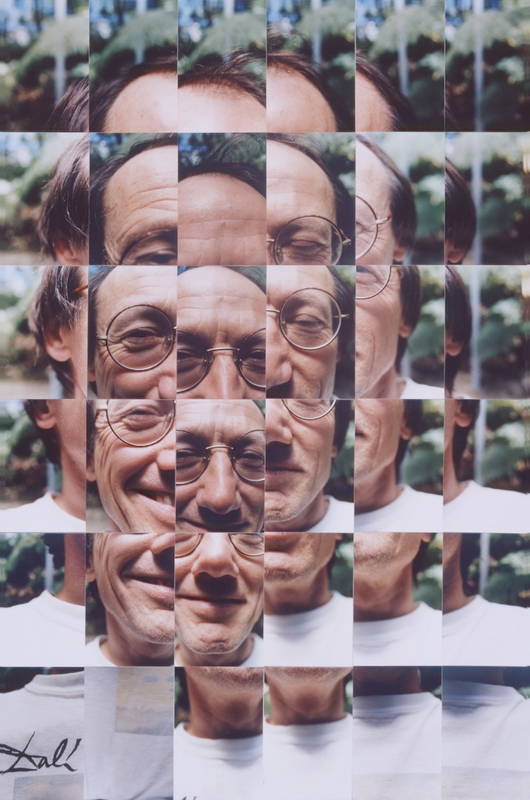
Whitaker was particularly interested in exploring the human face beyond the conventional portrait. Experimenting with extension tubes and extreme close-up photography, he began photographing individual features of Dalí’s face, including his ears, mouth and nostrils. As he later recalled, he wanted to get inside the artist’s head.
One particularly striking portrait, made in 1972, brought together all 36 exposures on a roll of film to construct a single image of Dalí. Rather than presenting a straightforward likeness, the resulting photograph invited the viewer to explore the subject through a multitude of individual details. It was an early expression of an idea that Whitaker would revisit and develop many years later.
Developing the Whitograph
Almost three decades later, Whitaker returned to this experimental approach, developing it into a distinctive body of work that became known as the Whitograph.
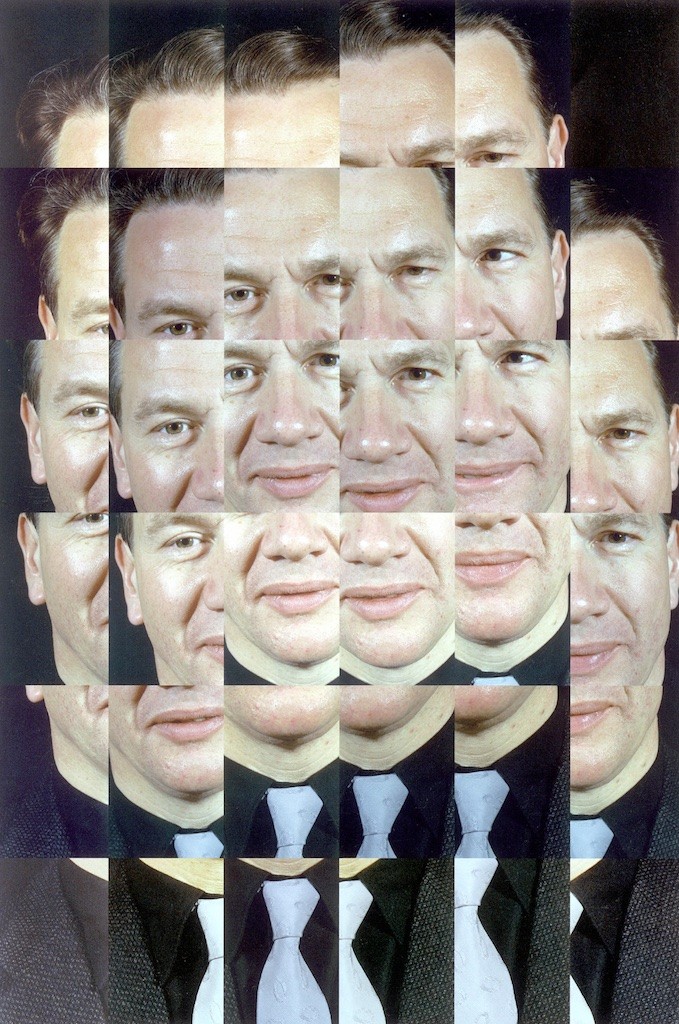
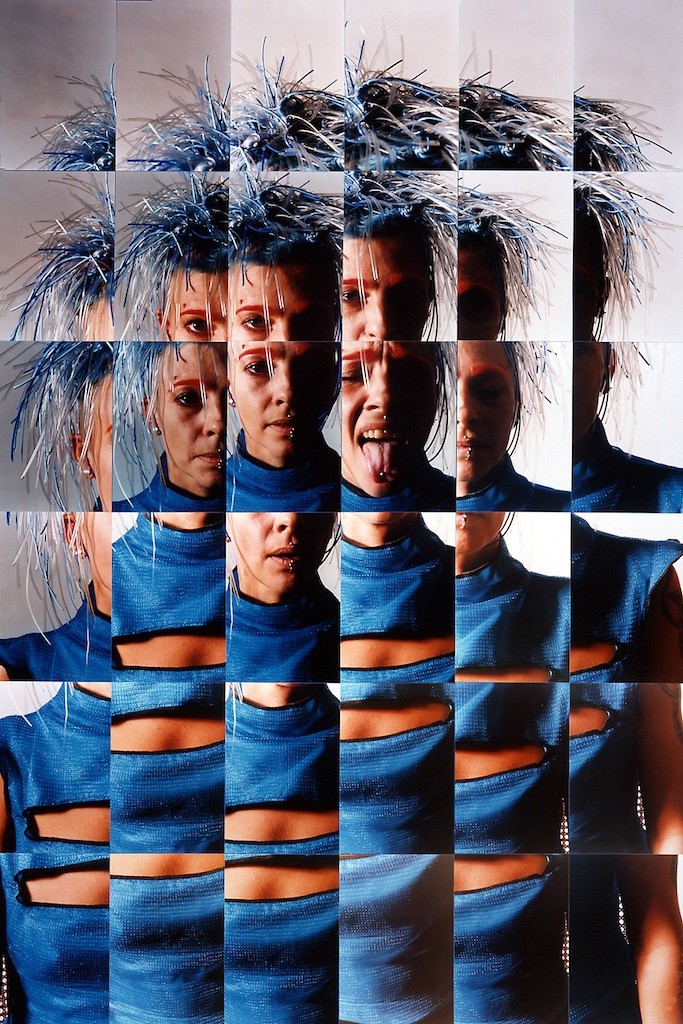
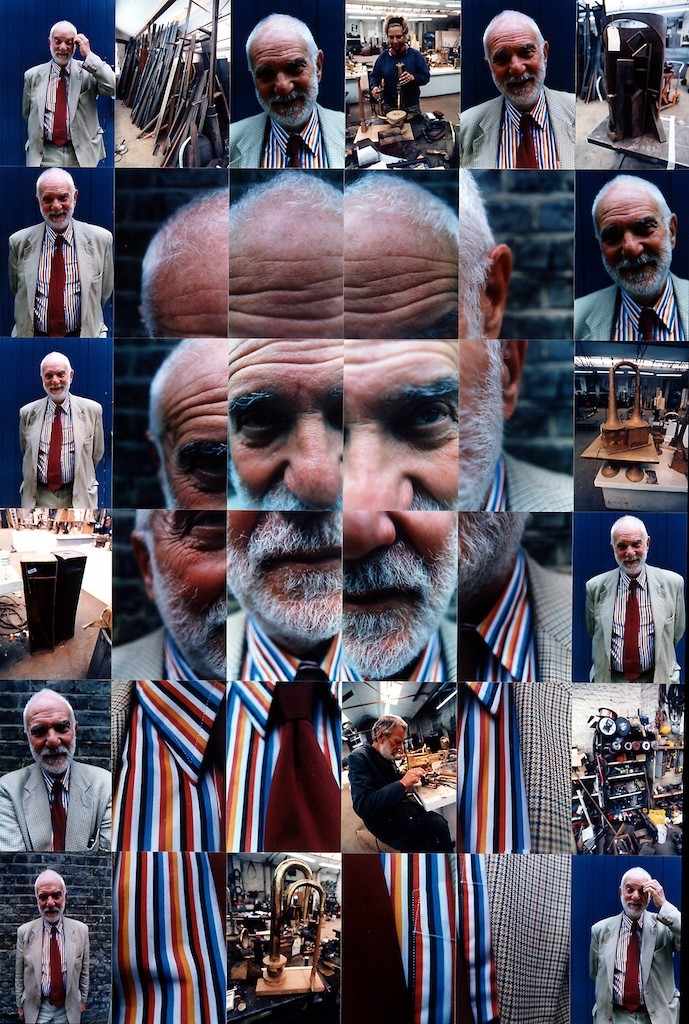
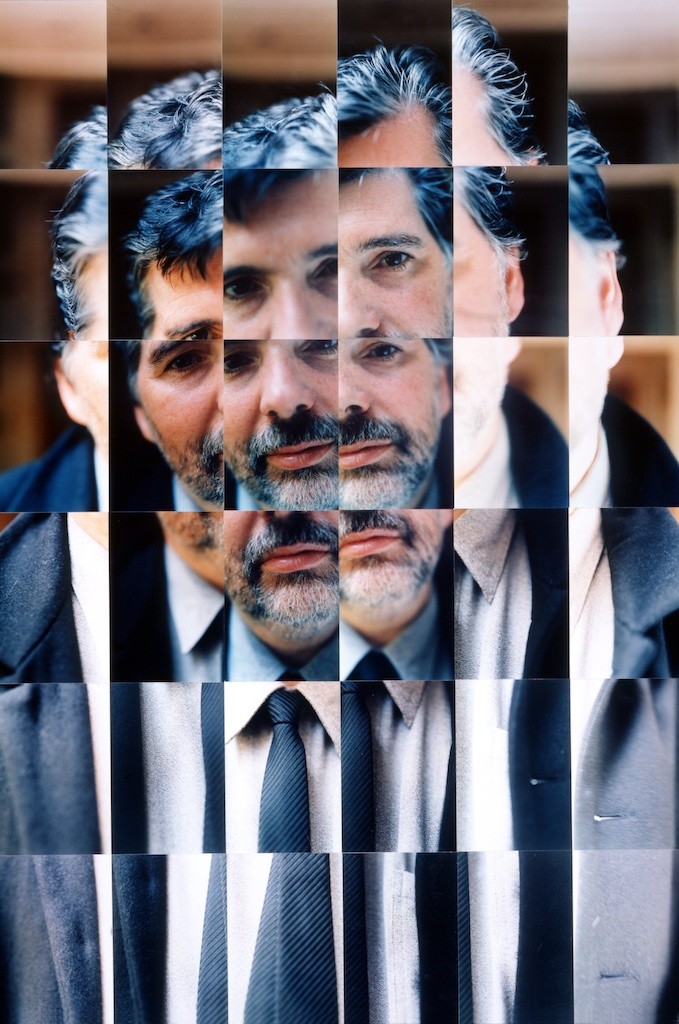
Among the artists he photographed using the technique were Judith Durham, Robert Besanko and Howard Arkley. Other subjects included sculptor Sir Anthony Caro and musician Robert Hunter.
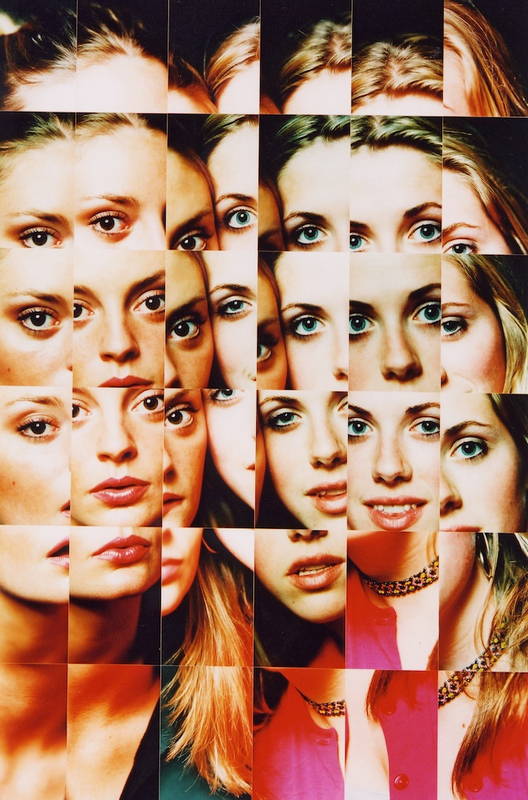
Each Whitograph was different. When photographing a person, Whitaker moved around his subject, capturing a sequence of close-up details and expressions. These individual photographs were then brought together to form a single composite portrait.
The process retained something of the spontaneity of conventional portrait photography while introducing an entirely different way of looking at the subject. The resulting images revealed details that might otherwise have gone unnoticed, encouraging the viewer to move between the individual components and the complete composition.
Whitaker’s work with the technique attracted wider recognition, including an Agfa Picture of the Year award for a Whitograph in 2000–2001.
The BMW Z4 – The Car as a Star, 2003
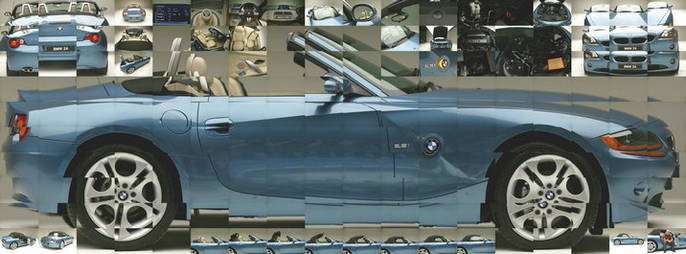
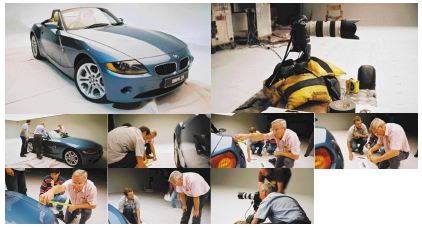
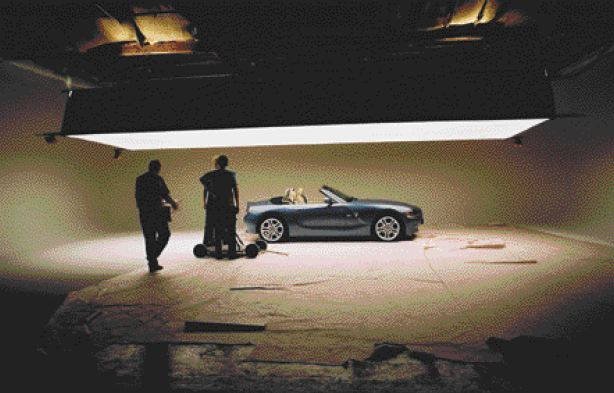
In 2003, Whitaker took the concept in an entirely new direction with an ambitious commission to create a Whitograph of the BMW Z4 roadster.
The idea emerged during a meeting with a supporter of Whitaker’s work, following a visit to his 40-year retrospective exhibition, Yesterday and Today. The distinctive design of the forthcoming BMW Z4 suggested an intriguing new subject. Its sweeping lines, sculptural surfaces and complex interior offered the opportunity to explore the personality of a machine in much the same way Whitaker had explored the human face.
The challenge, however, was considerable. Unlike a human portrait, which could be constructed from a relatively manageable number of close-up photographs, the dimensions of the car required an entirely different approach.
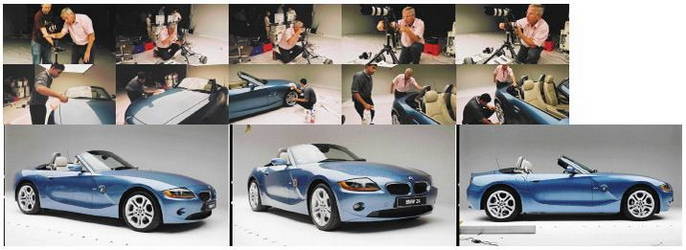
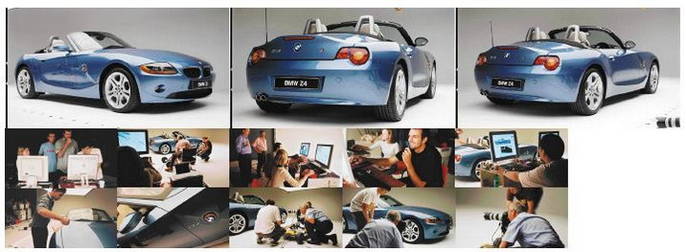
After considering various possibilities, Whitaker and his collaborators settled on digital photography and a computer-generated grid. Canon Australia supplied an EOS-1Ds digital camera body, while three Swinburne University students – Frank Chang, Simon Finn and Jacqui Warburton – provided computer expertise and technical assistance. Working with two powerful Apple Macintosh computers, the team developed a system capable of assembling the many individual photographs into one enormous, highly detailed image.
Whitaker brought to the project the same photographic experience and equipment he had used to photograph some of the world’s most recognisable faces. The result was arguably the largest and most technically challenging Whitograph he had produced.
The finished work transformed the BMW Z4 into a photographic portrait. Each individual 9 × 6-inch section revealed a different aspect of the car, while the complete composition brought these details together into a remarkably comprehensive image.
The digital construction also offered extraordinary possibilities for enlargement. Whitaker explained that the image could theoretically be reproduced almost the size of the Australian state of Victoria without losing the definition of its individual photographic components.
Reflecting on the project, he acknowledged the considerable contribution of the team, particularly given the technical demands and tight production schedule. Although the process was challenging, he was delighted with the result.
The BMW Z4 Whitograph was unveiled at the official launch of the roadster on Thursday 20 July 2003, at the Monash Gallery of Art in Victoria. Following its launch, the work was scheduled for display at the Bib Stillwell BMW showroom at 145 Williams Road, South Yarra.
An Experimental Photographer
The Whitographs offer an important insight into another side of Robert Whitaker’s photographic career. Best remembered by many for his images of the Beatles, Mick Jagger and the leading figures of the 1960s, Whitaker was never content to remain within the boundaries of music photography.
His work with Salvador Dalí demonstrated an enduring fascination with the possibilities of the camera. His later Whitographs took that curiosity further, bringing together traditional photographic skills and emerging digital technology to create something genuinely unusual.
From the intimate details of a human face to the complex forms of a contemporary sports car, the underlying idea remained the same: to look closer, explore further and reveal a subject in a way that a single conventional photograph could never quite achieve.
The Whitograph was not simply a photographic experiment. It was an expression of Whitaker’s restless imagination, his technical curiosity and his lifelong determination to see the world differently.