
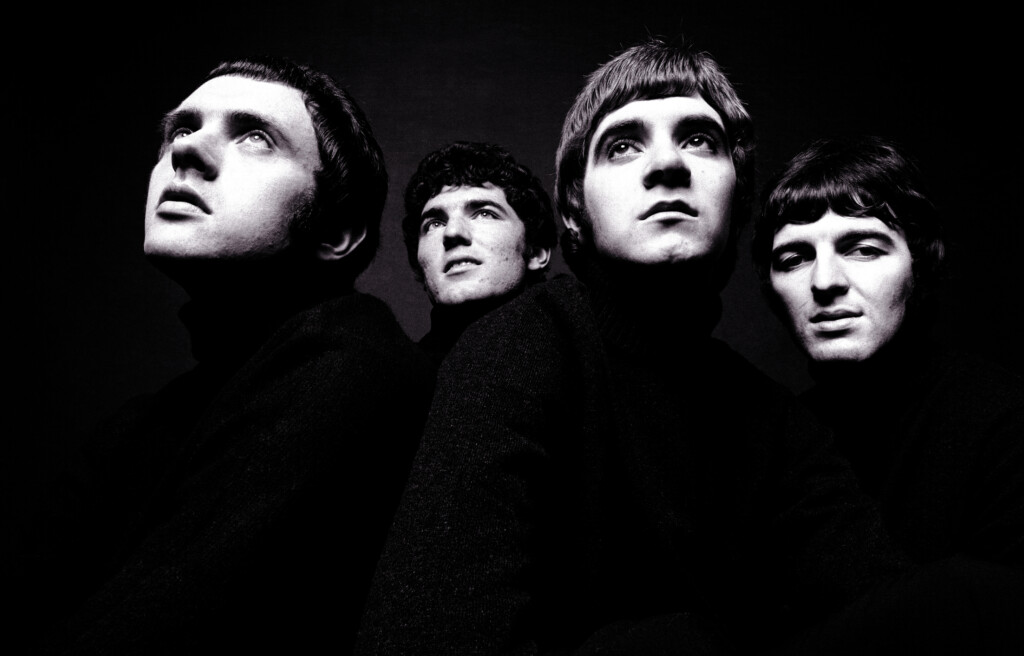
London, England | 1968
Photography: Robert Whitaker
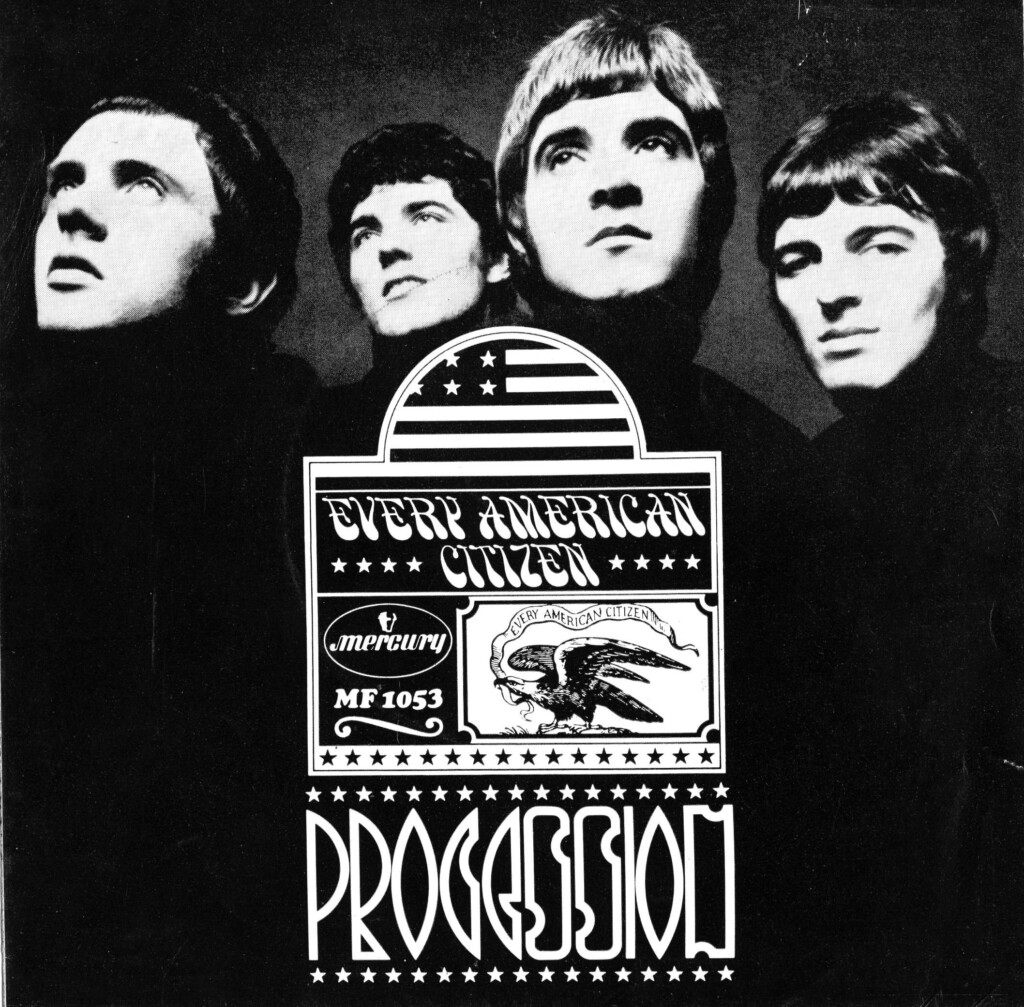
This photograph of Australian pop-rock group Procession was taken by Robert Whitaker in London in 1968, during a photographic session for the band’s Every American Citizen release.
One of a series of images made during the session, the photograph was selected for use on the front cover, bringing Whitaker’s distinctive visual style to the group’s British release.
Formed in Melbourne in October 1967, Procession brought together four musicians with experience in some of Australia’s and New Zealand’s established pop groups. The original line-up comprised Trevor Griffin (organ and vocals), Mick Rogers (guitar and vocals), Craig Collinge (drums) and Brian Peacock (bass and vocals).
The group emerged from the break-up of The Playboys, previously the backing band for Australian singer Normie Rowe, and incorporated musicians from the New Zealand group The Librettos. Despite their relatively short existence, Procession quickly developed a reputation as one of Australia’s more adventurous and musically ambitious groups of the period.
Their approach was unusual. Rather than simply following the prevailing beat-group formula, they experimented with vocal arrangements, jazz influences and more sophisticated musical structures. Their debut single, Anthem, released in December 1967, was performed entirely a cappella, with the musicians recreating the sounds normally supplied by instruments using their voices. A subsequent television performance featured a 40-piece choir.
Their second single, Listen, released in March 1968, was notable for being the first Australian record made using newly installed eight-track recording equipment at Festival Records. Their live album, Procession Live at Sebastians, recorded in Melbourne, further demonstrated their interest in musical experimentation.
Despite attracting considerable attention at home, commercial success remained elusive. In July 1968, the group left Australia for London, hoping to establish themselves in the increasingly competitive British music scene.
Their arrival was documented in the British music press. In its issue dated 21 September 1968, Record Mirror introduced the band to its readers under the headline ‘Join the Procession’, describing the four musicians as a new Australian group signed to Mercury Records. The magazine announced the release of Every American Citizen on 20 September.
The single itself was an unusual introduction to British audiences. Built around an intricate vocal arrangement, the song combined a catchy chorus with commentary on American society and the American way of life. Its B-side, Essentially Susan, offered a contrasting and more understated musical approach.
The group’s subsequent career included a self-titled studio album, produced by Mike Hugg of Manfred Mann, released in 1969. Although the album attracted favourable critical attention, commercial success continued to prove difficult. Procession eventually disbanded in September 1969.
Several of the musicians went on to enjoy notable careers. Mick Rogers became widely recognised as guitarist and vocalist with Manfred Mann’s Earth Band, joining the group in 1971. Drummer Craig Collinge subsequently played with the British heavy rock group Third World War and Manfred Mann Chapter Three. Brian Peacock also became associated with Manfred Mann’s Earth Band, while Trevor Griffin continued his musical career.
Although Procession’s recording career lasted barely two years, the group remains an intriguing example of the experimental spirit of late-1960s Australian pop and the ambitions of musicians who travelled to Britain in search of a wider audience.
This photograph, appearing on the British picture sleeve of Every American Citizen, documents a brief but distinctive chapter in that story.
Photograph © Robert Whitaker
Sources:
- The Strange Brew – Procession – an extensive history featuring interviews with band members.
- Garage Hangover – Procession gigs 1967–1969 – contemporary gig listings and historical press references.
- Record Mirror, 21 September 1968 – original contemporary British coverage, including the single’s release announcement.