
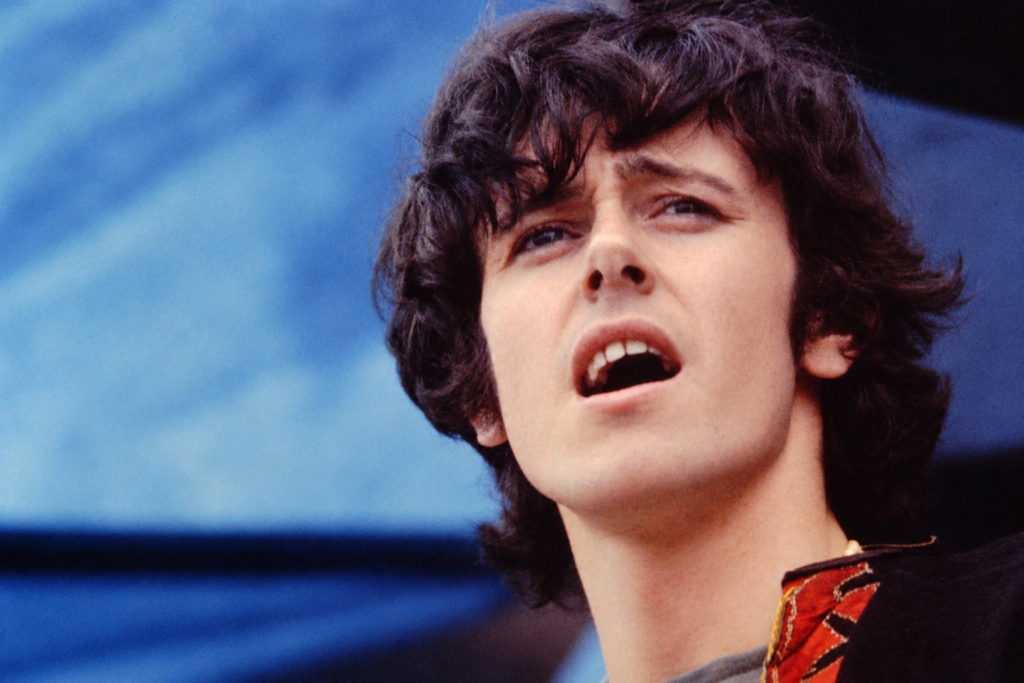
Windsor, England | 1967
Robert Whitaker photographed Scottish singer-songwriter Donovan (Donovan Philips Leitch) performing at the Windsor Jazz & Blues Festival, capturing a musician whose distinctive sound and appearance had become synonymous with the changing cultural landscape of the 1960s.
Born in Maryhill, Glasgow, on 10 May 1946, Donovan emerged from the British folk scene in the mid-1960s. His early recordings, including Catch the Wind and Colours, established him as one of Britain’s most distinctive young singer-songwriters. Initially compared by the press to Bob Dylan, Donovan developed a musical identity of his own, combining traditional folk influences with elements of jazz, blues and, increasingly, psychedelic pop.
By 1966, Donovan was entering one of the most creatively significant periods of his career. Working with producer Mickie Most, he moved beyond his acoustic folk beginnings towards a more experimental sound. Sunshine Superman, with its unusual instrumentation and psychedelic arrangements, marked a defining moment in this transformation. The title track became a major international hit, followed by Mellow Yellow, further establishing Donovan as one of the leading musical voices of the emerging counterculture.
The National Jazz & Blues Festival at Windsor was an important fixture in Britain’s rapidly developing live music scene. Bringing together established performers and a new generation of British and international artists, it provided a platform for the musical experimentation taking place during the decade.
Donovan’s appearance at the festival is documented in the 1967 programme, alongside artists including Cream, Jeff Beck, John Mayall’s Bluesbreakers and Fleetwood Mac. The festival was held at Balloon Meadow, Royal Windsor Racecourse, from 11–13 August 1967.
Whitaker’s photograph preserves a moment from this extraordinary period in British popular music, when folk, blues and psychedelia were increasingly finding common ground and a new generation of artists was reshaping the sound and visual identity of popular culture.