Jeremy Fry, art without limits | Widcombe Manor, Bath | 1968–1969
An experiment in making contemporary art accessible
In the late 1960s, British engineer, inventor and entrepreneur Jeremy Fry embarked on an unusual artistic venture. Called Unlimited, the project challenged the conventions of the contemporary art market, questioning the exclusivity of limited editions and the idea that original art should be available only to wealthy collectors.
Fry (1924–2005) was an unconventional entrepreneur whose interests extended well beyond engineering and industry. Born in Bristol, he founded Rotork Engineering in 1957 and became a successful industrialist, but he was equally fascinated by architecture, design, contemporary art and the possibilities of new technology.
A generous host and enthusiastic patron of the arts, Fry brought together artists, designers, engineers and musicians at his home, Widcombe Manor, near Bath. His circle included some of the most interesting creative personalities of the period.
His friendship with Robert Whitaker developed naturally from this shared interest in art and unconventional ideas. The two immediately established a rapport, and Fry invited Robert to photograph one of his most ambitious creative undertakings: Unlimited.
A different approach to collecting art
The origins of Unlimited can be traced to John Dunbar’s influential Indica Gallery in London, an important meeting place for avant-garde artists, writers and musicians during the 1960s. Fry had invested in the gallery, which became closely associated with the emerging experimental art scene.
When Indica closed in 1967, Fry found himself with a number of kinetic sculptures known as Signals, created by the Greek artist Takis. Rather than simply retain the works as private collection pieces, he saw an opportunity to develop something much more ambitious.
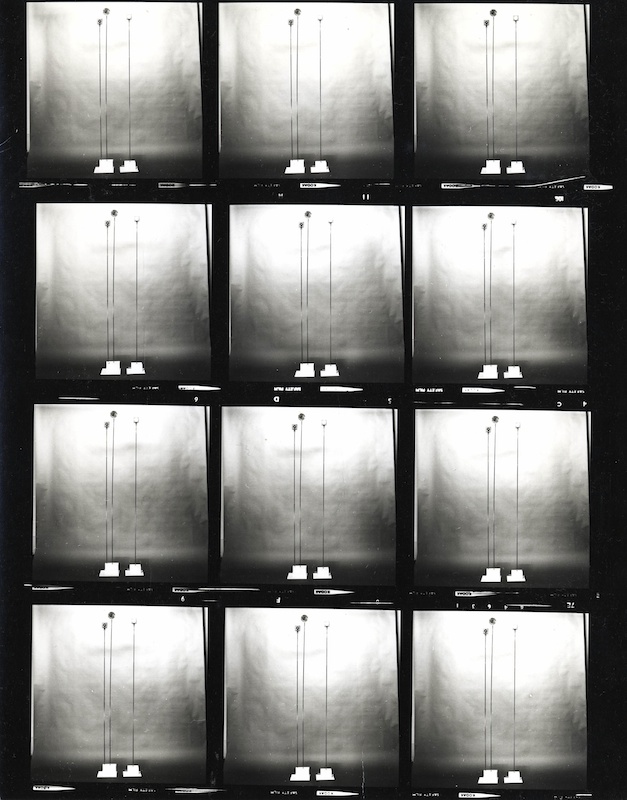
Working with Takis, Fry set about producing properly designed, electrically safe versions of the artist’s illuminated Signals. The intention was to manufacture them in quantity and sell them at accessible prices, rather than restrict their availability through conventional limited editions.
The resulting project became Unlimited. Its philosophy was deliberately light-hearted and democratic: contemporary art should be something people could afford to buy and enjoy, rather than an exclusive possession reserved for established collectors.
The project even took a stand at the Ideal Home Exhibition, an unlikely but entirely appropriate setting for an initiative that sought to bring experimental art into everyday domestic life.
Takis – Signals
One of the central works associated with Unlimited was the Signal series by Takis (Panayiotis Vassilakis, 1925–2019).
Takis was internationally recognised for his experiments with magnetism, movement, electricity and light. His Signals were slender, sculptural constructions incorporating flexible metal elements and illuminated components, creating works that occupied a space between sculpture, technology and kinetic art.
Through Unlimited, these ideas could be translated into more affordable objects for a wider audience. The collaboration between Takis and Fry demonstrated how an artist’s original concept could be adapted for wider production without abandoning its experimental character.
The project reflected the growing fascination with the relationship between art, science and technology that characterised much of the avant-garde movement during the 1960s.
Liliane Lijn – Liquid Reflections
Another important Unlimited collaboration involved American-born artist Liliane Lijn (born 1939), whose work explored the relationship between light, movement, language and scientific processes.
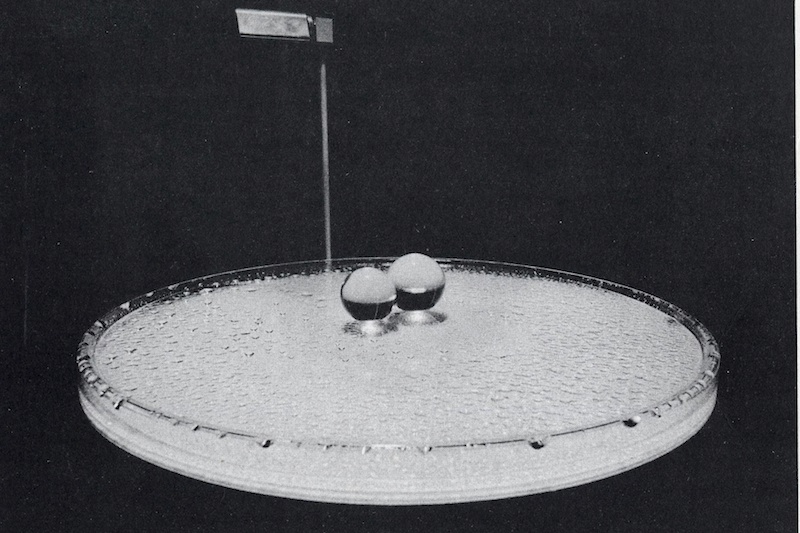
Her Liquid Reflections was a particularly fascinating kinetic sculpture, incorporating Perspex, acrylic spheres, distilled water, paraffin, an electric light and a motor. The moving elements created constantly changing reflections, transforming the work into a small, self-contained environment of light and motion.
Originally conceived in 1967–68, the work was developed in collaboration with Jeremy Fry into an edition intended for wider distribution. The project was an early example of what became known as the art multiple: an artwork produced in a series rather than as a single unique object.
Lijn’s work was particularly suited to Fry’s philosophy. It combined the precision of engineering with the imagination of contemporary sculpture, demonstrating that technological processes could become an integral part of artistic expression.
Robert Whitaker and Unlimited
Jeremy Fry invited Robert Whitaker to photograph the Unlimited project, documenting its unusual objects and the creative personalities associated with it. Robert and Jeremy hit it off instantly.
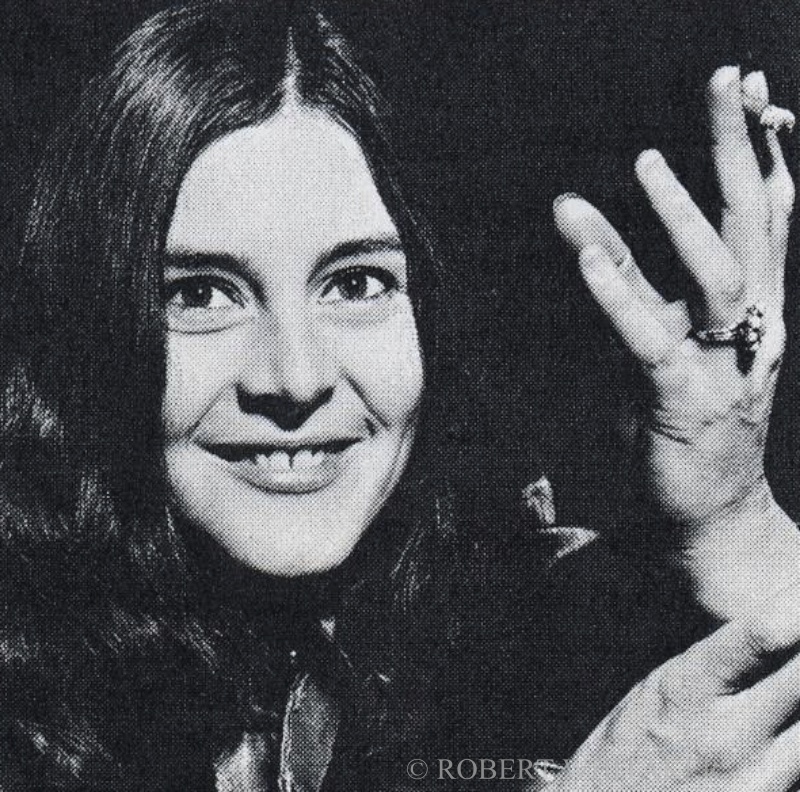
Robert’s photographs include the illuminated Signals by Takis, Lijn’s Liquid Reflections, portraits of Liliane Lijn and images of Jeremy Fry at Widcombe Manor.
These photographs preserve more than a record of individual artworks. They document an ambitious attempt to challenge established attitudes towards art ownership and distribution at a time when British artists and designers were experimenting with entirely new ways of working.
For Robert, whose photographic career brought him into contact with musicians, artists, writers and some of the most influential personalities of the 1960s, Unlimited represented another fascinating intersection of creativity and unconventional thinking.
The irony of Unlimited
There is a particularly interesting irony in the project’s subsequent history. An initiative conceived to challenge the exclusivity of the art market and make artworks affordable to ordinary buyers has itself become part of the history of collectible contemporary art.
The Unlimited objects, once intended to be available in quantity and sold at relatively modest prices, are now sought after by collectors and appear in important art collections and auction sales.
Liliane Lijn’s Liquid Reflections Unlimited, for example, has subsequently appeared on the international art market, while examples of Takis’s Unlimited Signals have entered major museum collections.
Today, the project is recognised as an important experiment in the history of kinetic art, design and the development of the art multiple.
Jeremy Fry’s achievement was not simply to help produce affordable artworks. He created a meeting point between artists and engineering, challenging the boundaries between fine art, industrial design and everyday objects.
Robert Whitaker’s photographs provide a valuable visual record of this remarkable undertaking, preserving the story of an ambitious project that sought to make art, quite literally, unlimited.
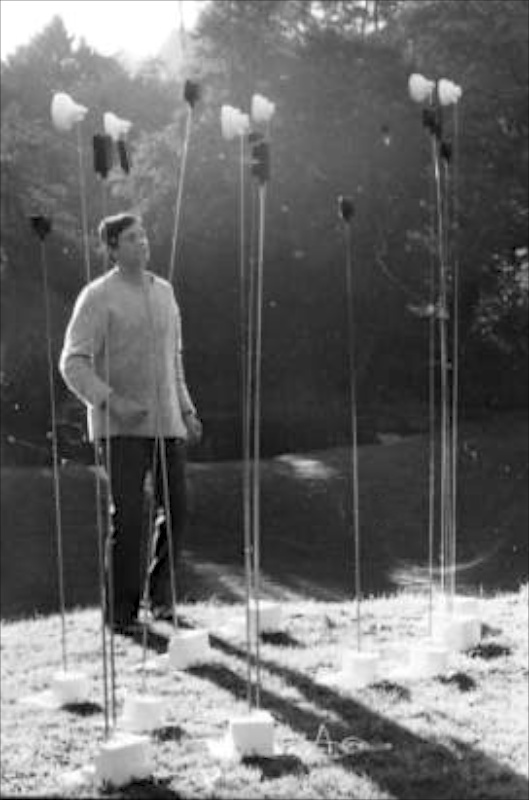
Manor, Bath, England. Photo – Robert Whitaker